Wow, one of the most interesting towns we have visited in Spain. We have watched and read lots about El Rocio, but wonderful to experience it in person. The village is surrounded by the Doñana National Park (renowned for its birdlife) and a part of the wetlands lay on the edge of the village. It’s a beautiful setting and the national park is certainly something we hope to explore more next time. The horses are beautiful and the riders trot around the village along with the carriages.
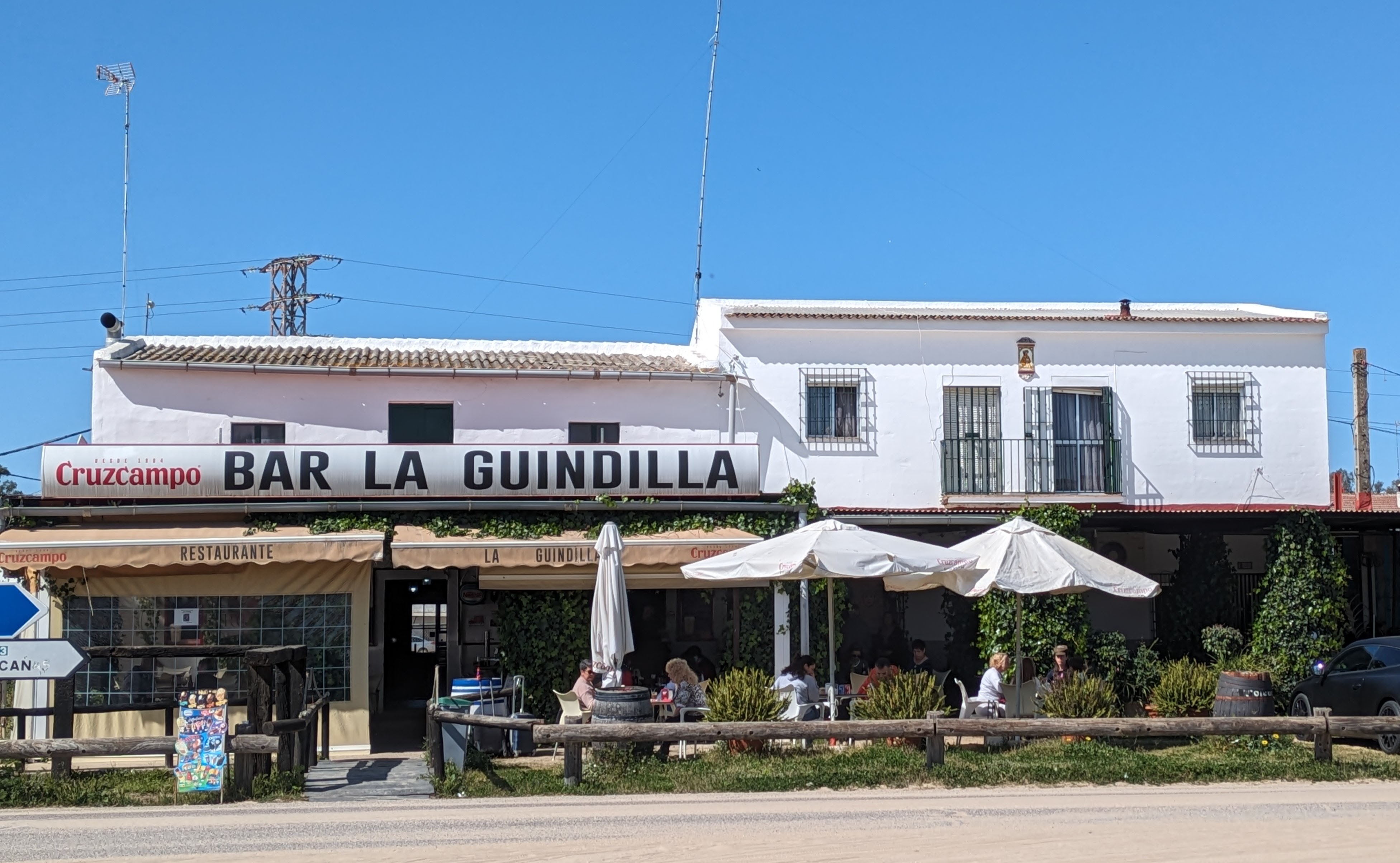

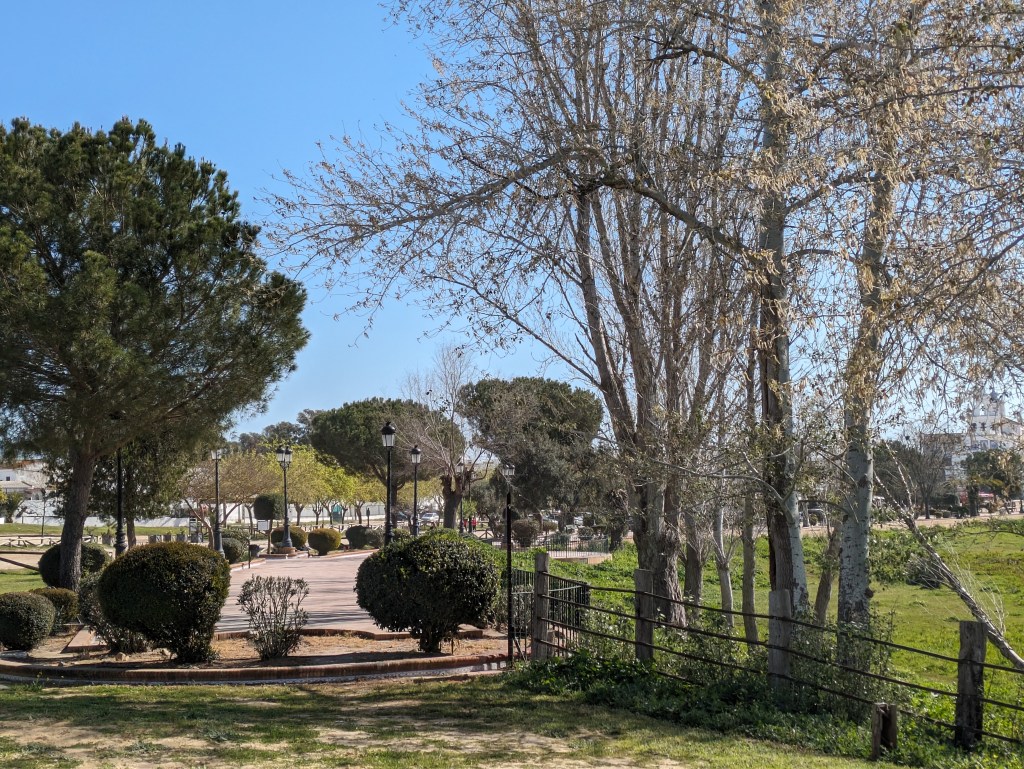

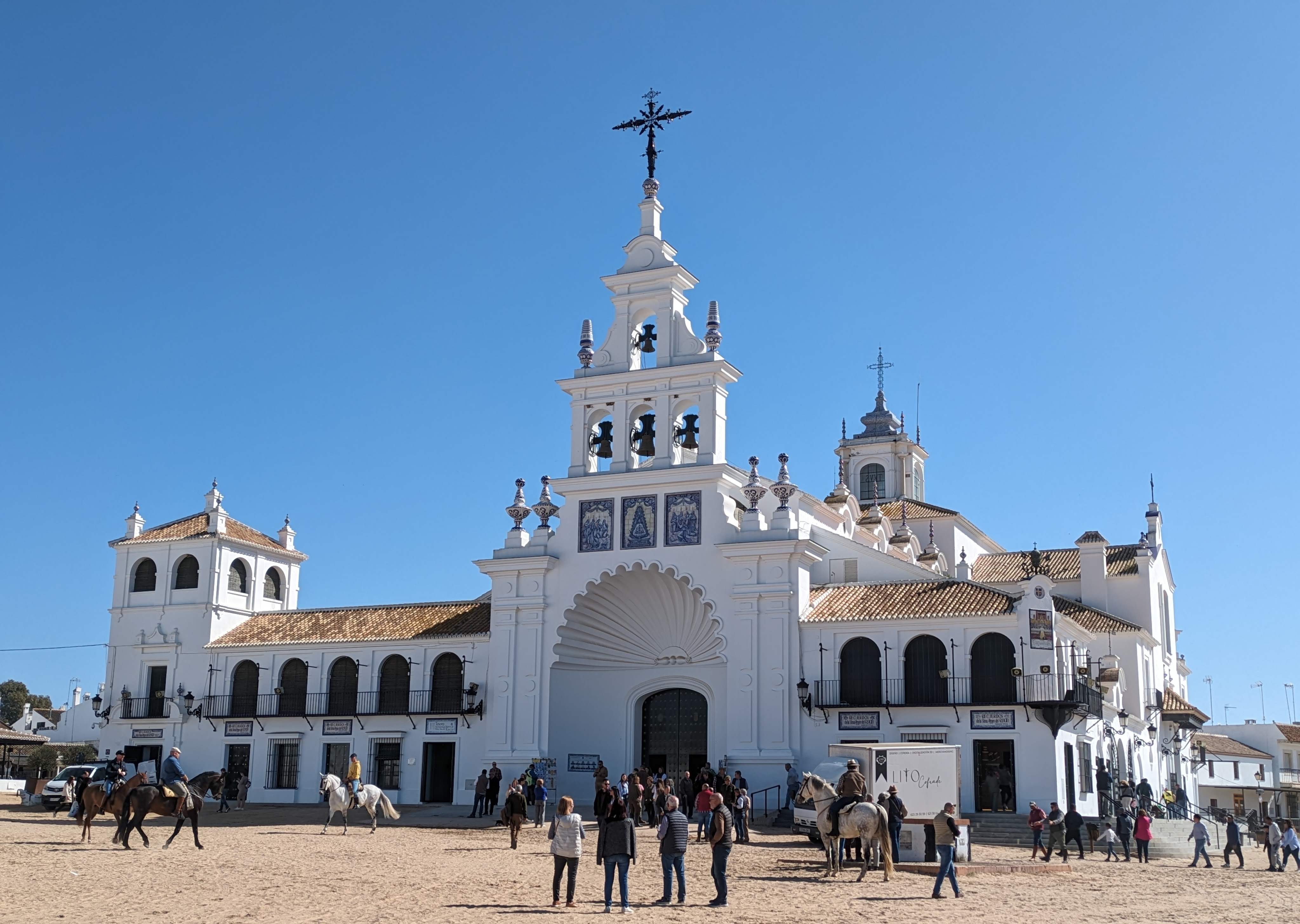
Large white houses and sandy streets presided over by the hermitage of the Virgin of the Rocío (Santuario de Nuestra Señora del Rocío). The legend goes that a local shepherd found a carved image of the Virgin Mary in a tree trunk. He removed it, with the intention of taking it to Almonte (a village near El Rocio) but fell asleep along the way. When he woke up, the carving had gone. He went back to where he had found it…and there it was. When he recounted the event back in Almonte, the locals decided to build a hermitage to revere the Virgin of Las Rocinas, as she was called at the time.
We visited on a Friday morning in early March and were amazed at how busy it was with people visiting the hermitage and lighting candles.
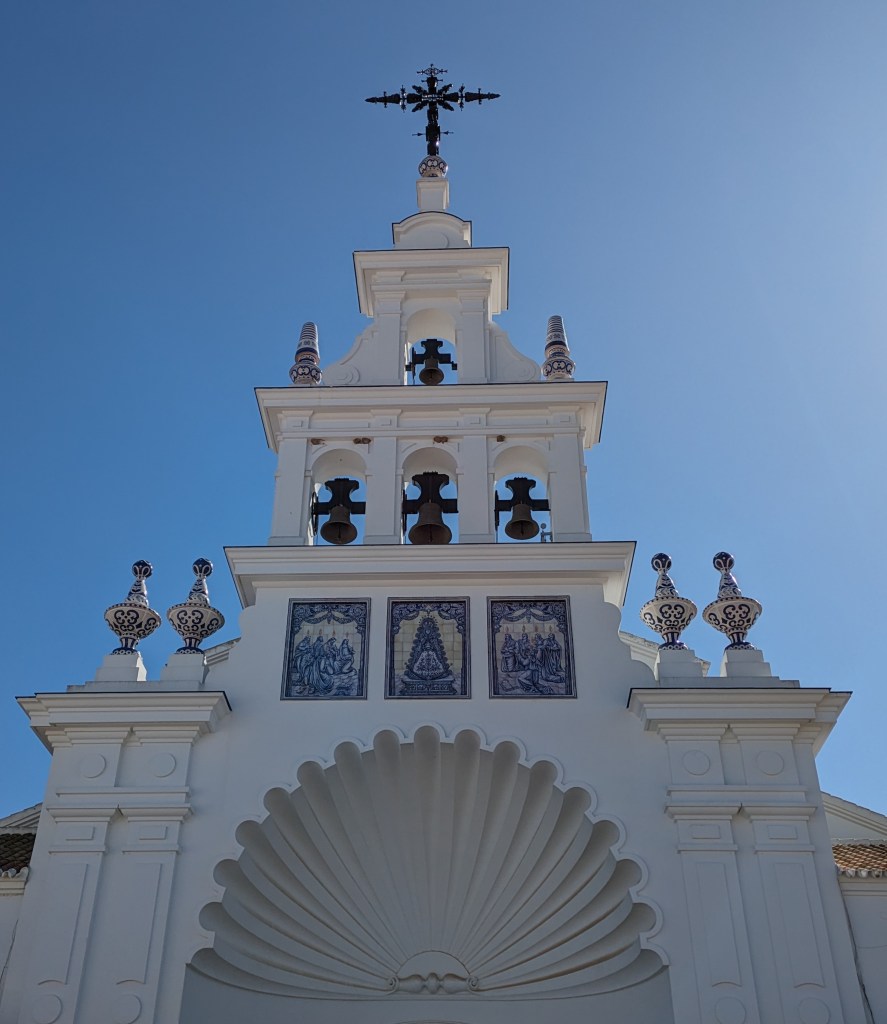
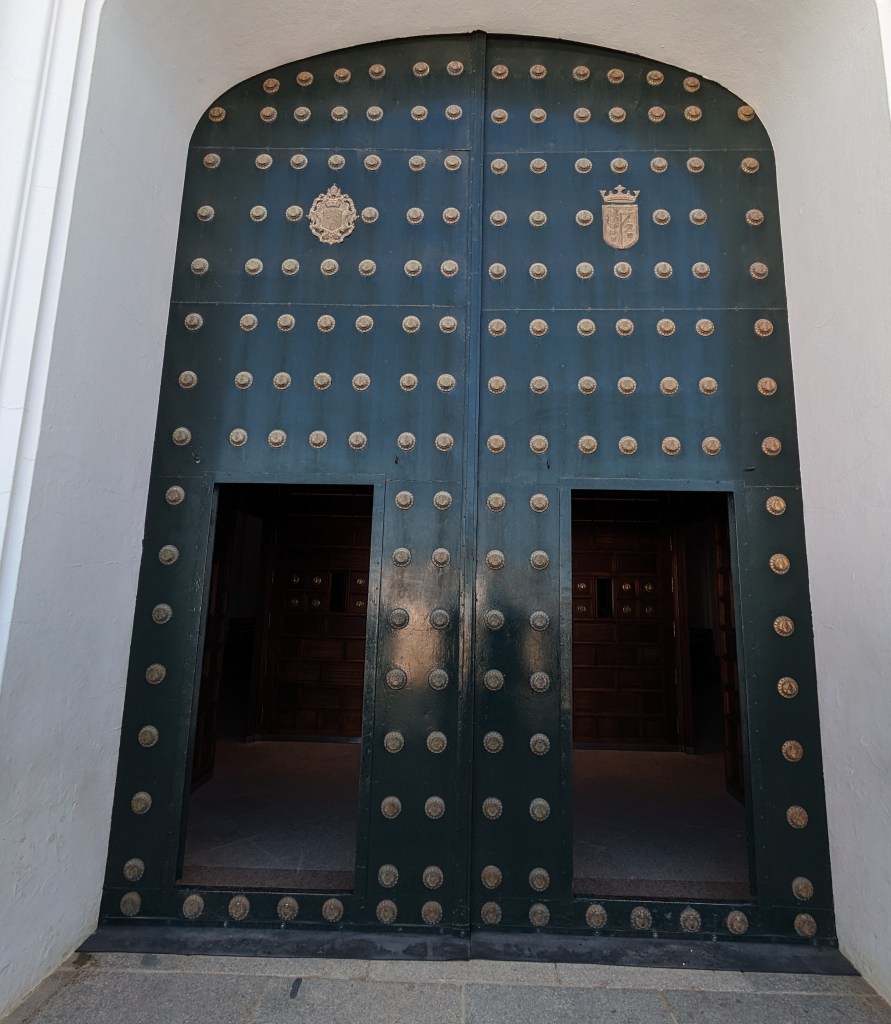
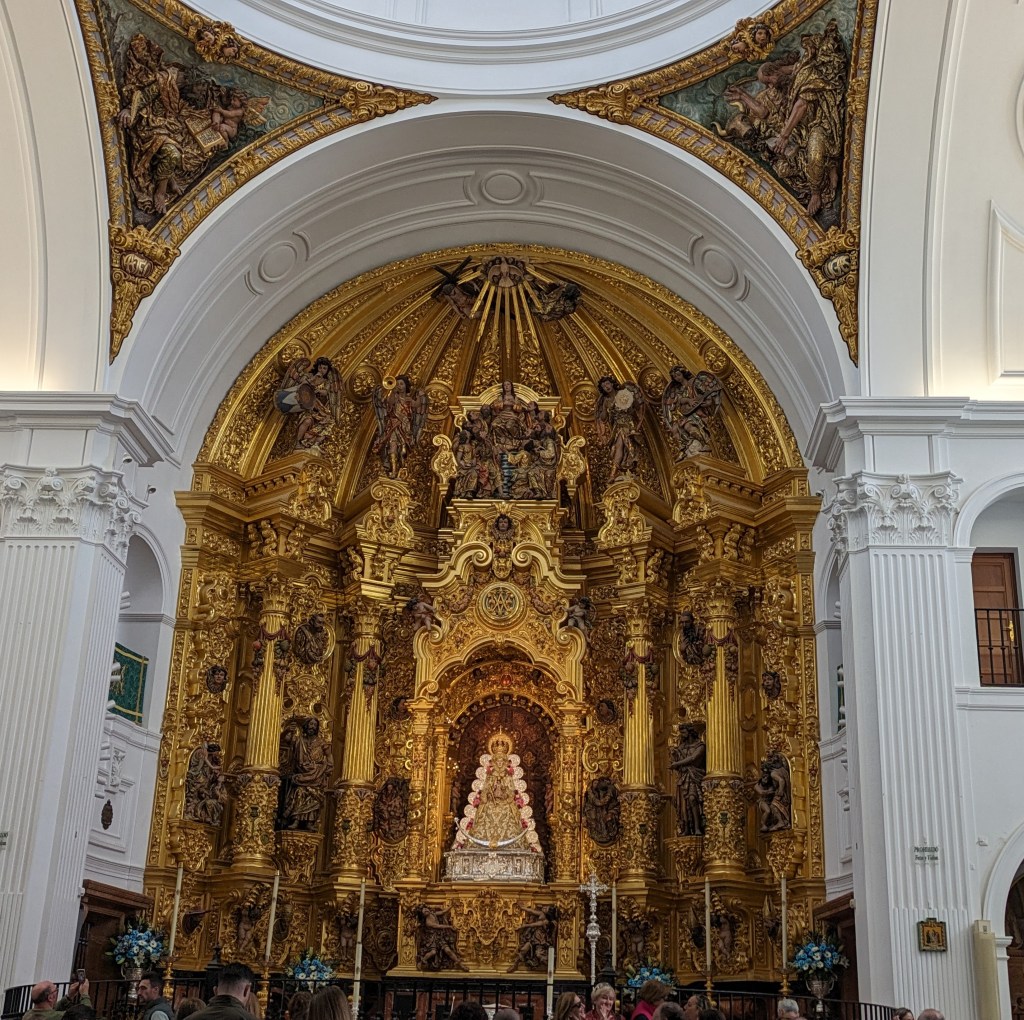
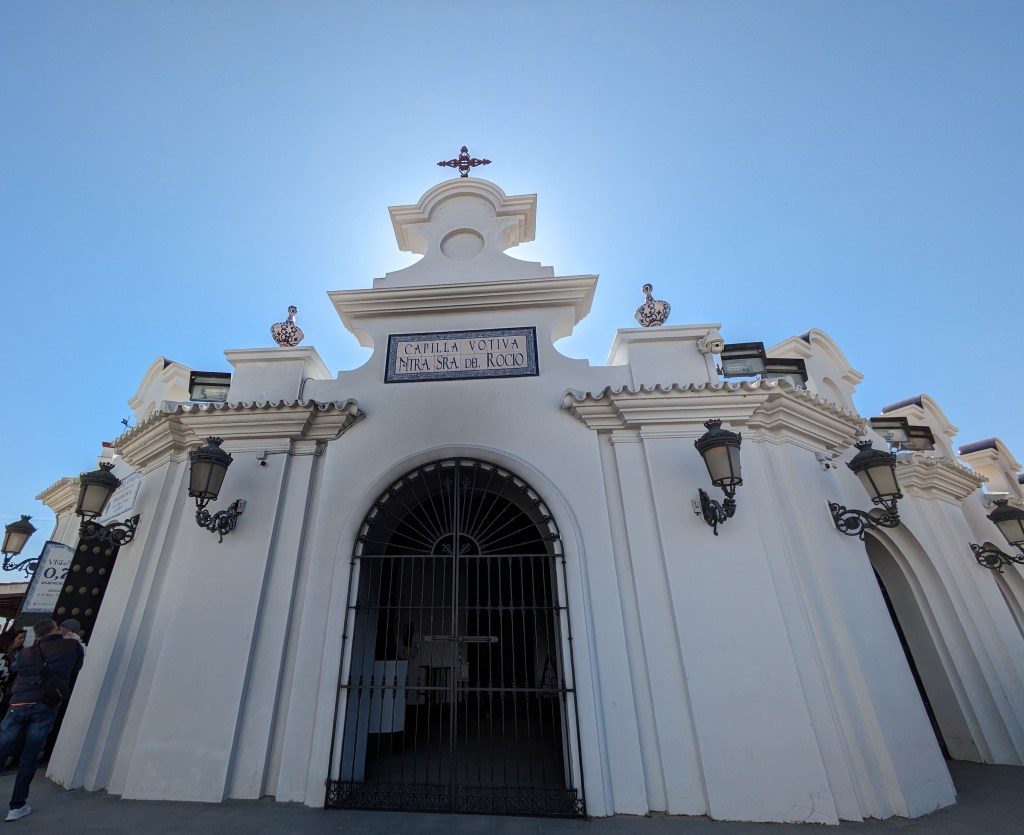
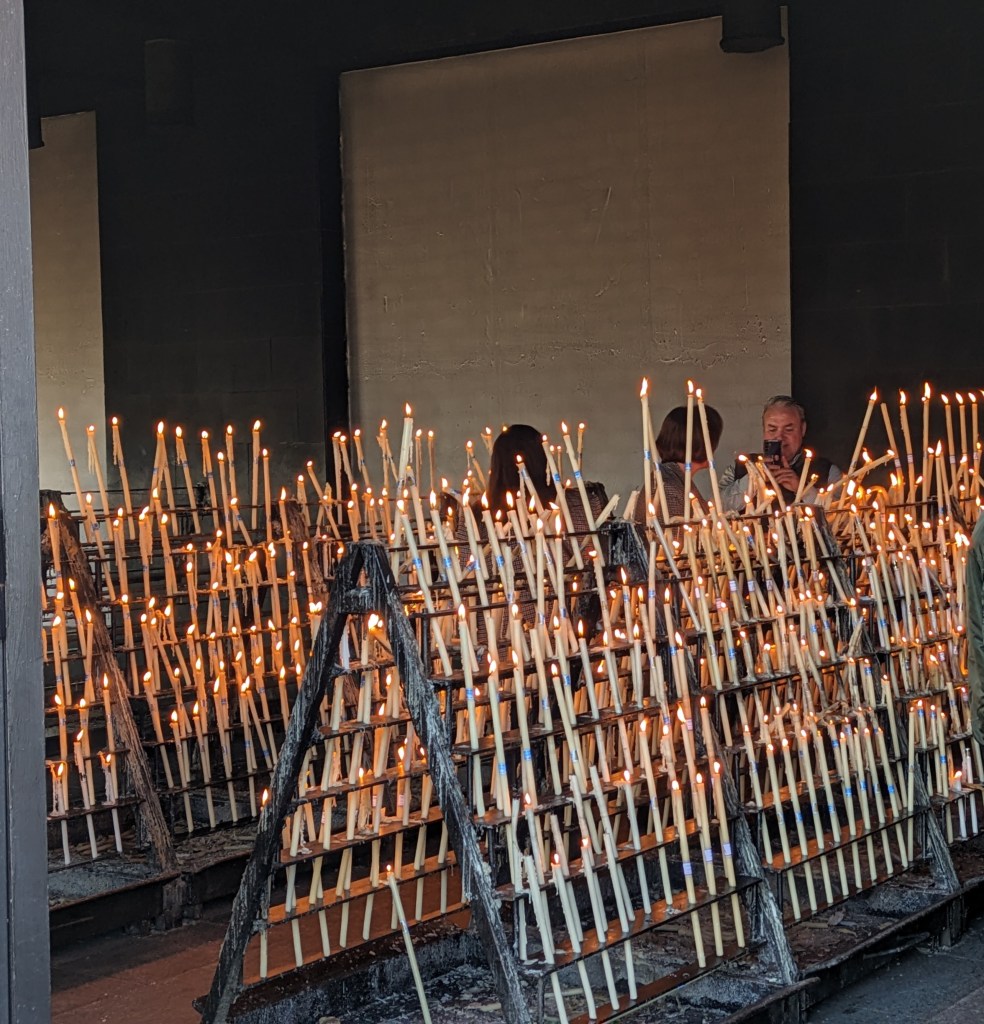
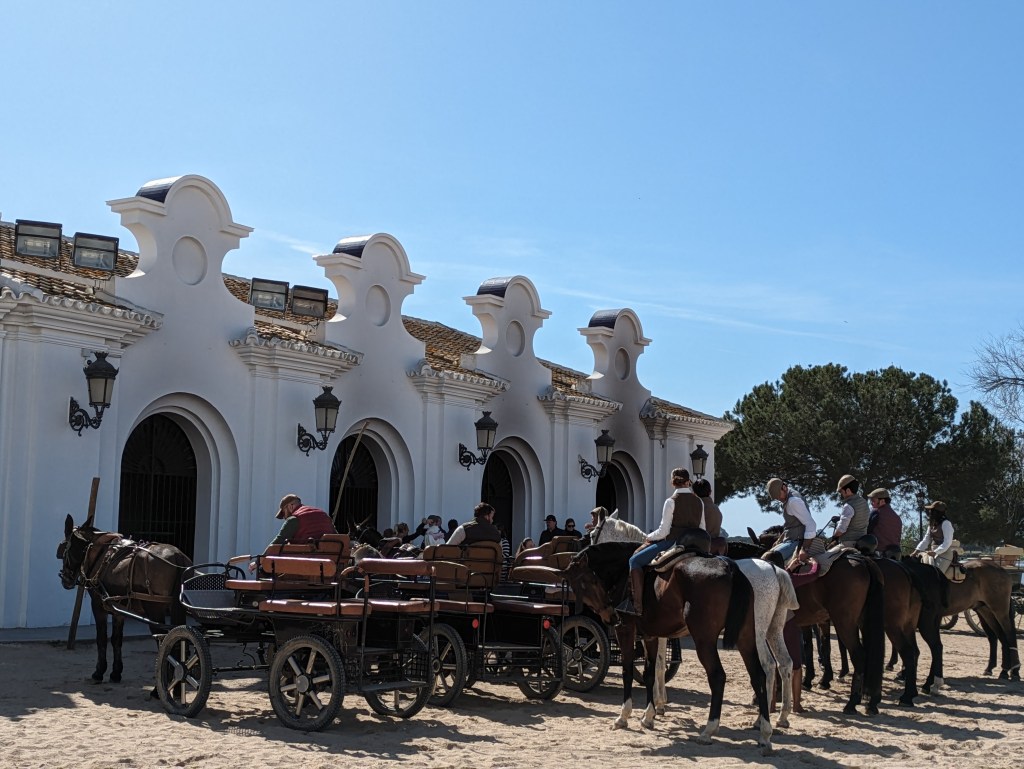
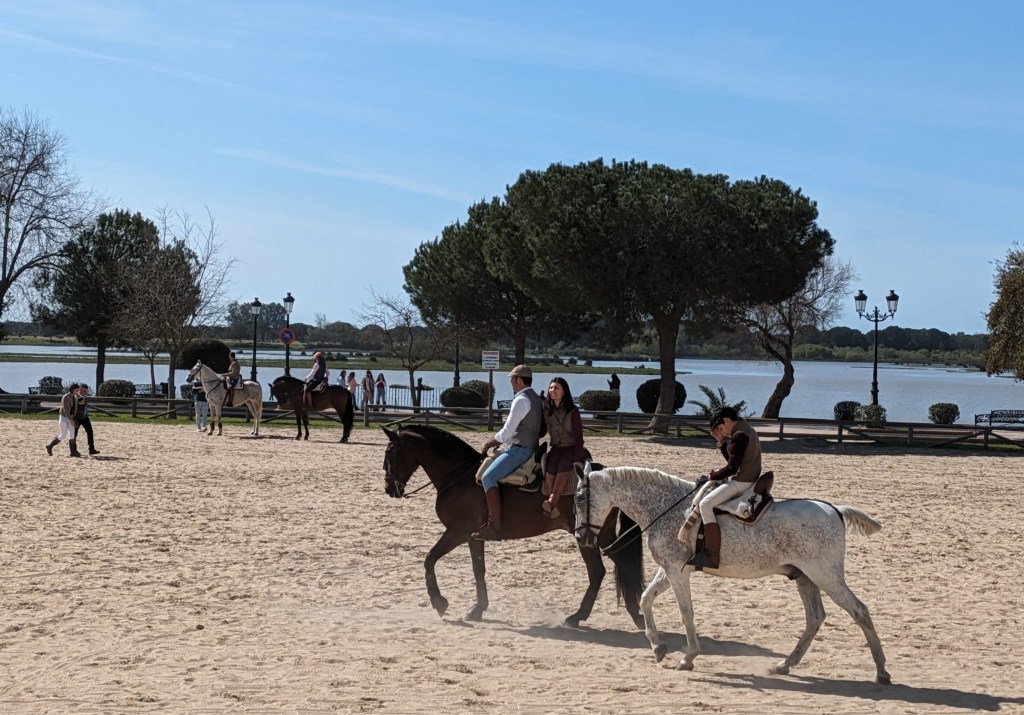

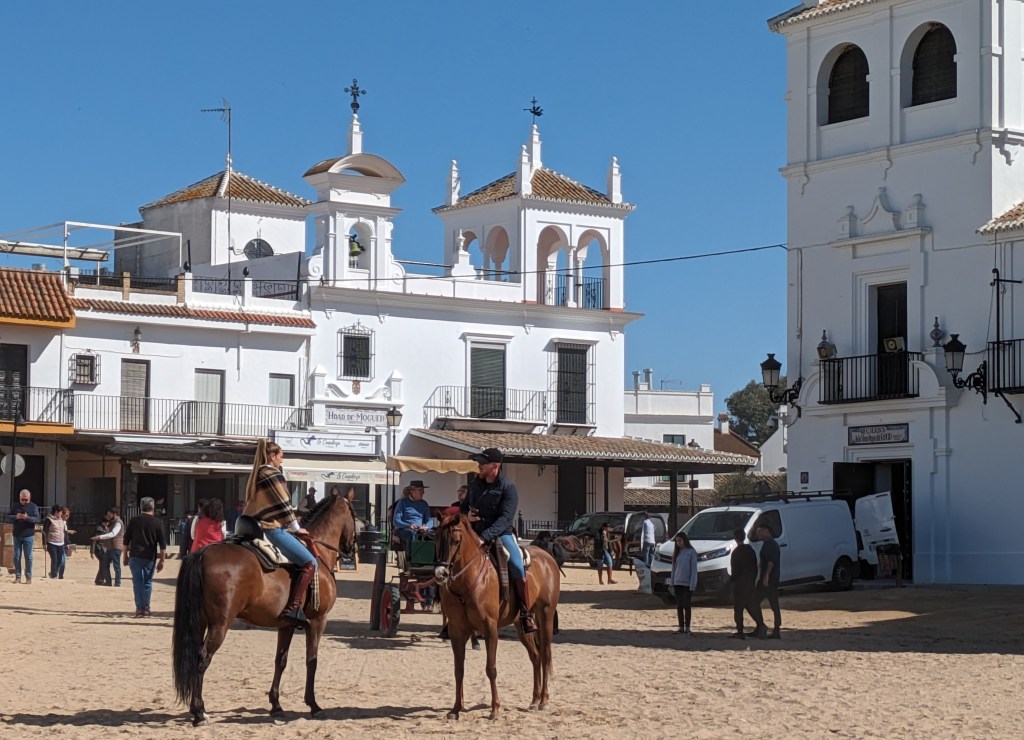
Believers are very devoted to the Virgin of El Rocío all year round but the Pilgrimage of El Rocío is the high point. It is a pilgrimage that is traditionally done on foot, on horseback or by cart to the hermitage of the village of Rocío. It is one of the most famous pilgrimages and attracts the largest number of people. Pilgrims travel to the village from places all over Spain and even from abroad. It lasts three days and over a million people including visitors and pilgrims stay in and around El Rocío for that time.
An important element of the pilgrimage is the hermandades (brotherhoods). The hermandades are a vital part of the religious festivals in Spain. Most would recognise them from the Semana Santa (Easter) where they carry the statues in the Easter processions. You can read more about the fascinating history and significance of hermandades in the article.
The different hermandades set out and begin the journey to El Rocío such that they arrive on the eve of Whitsun. Each hermandad (brotherhood) had their own casa or headquarters in El Rocio. The first brotherhood dates back to the 16th century. There are now over 120 similar brotherhoods right across Spain and they play an official role in the annual activities.

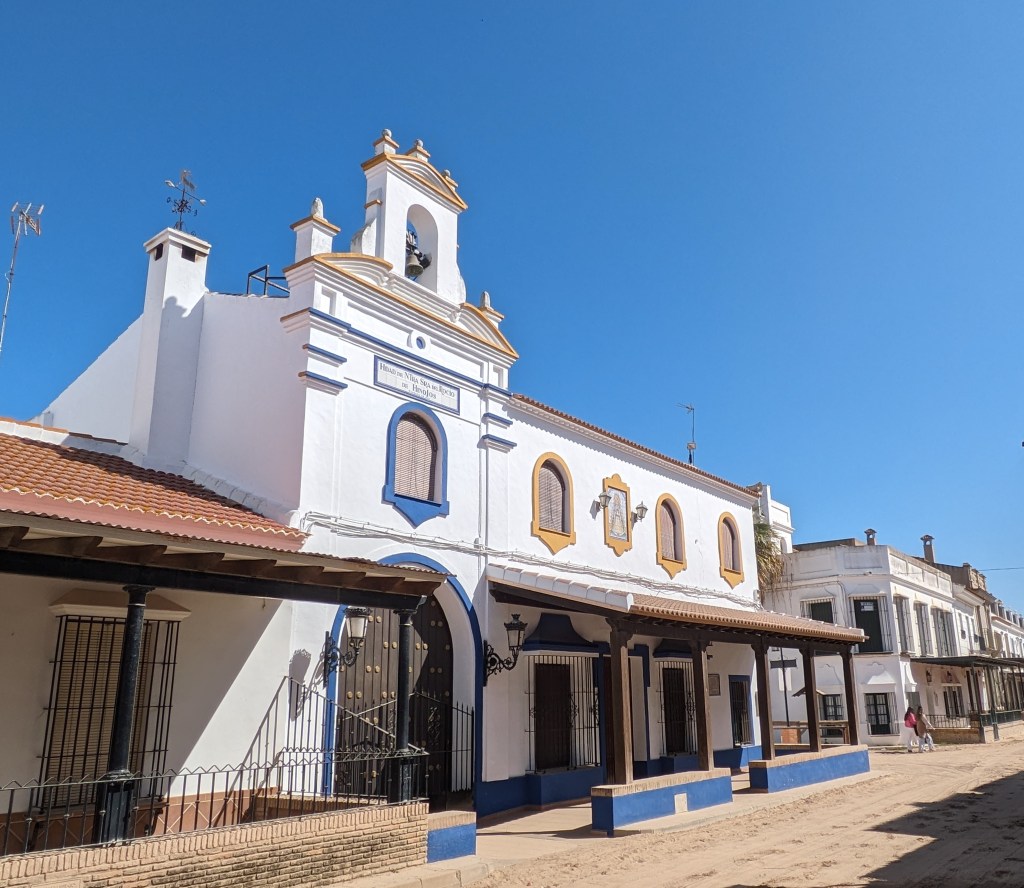

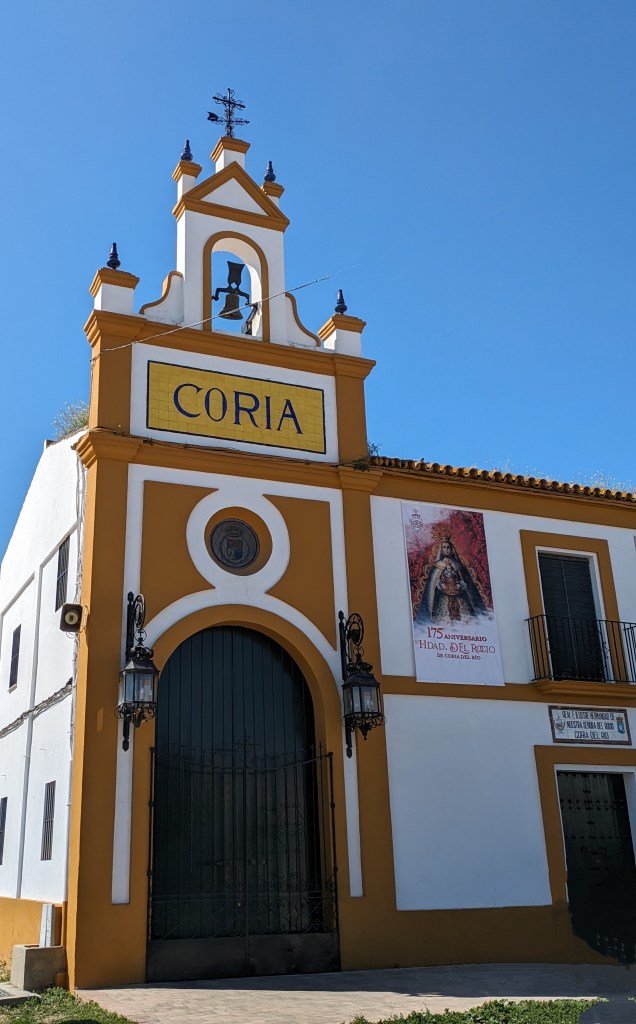
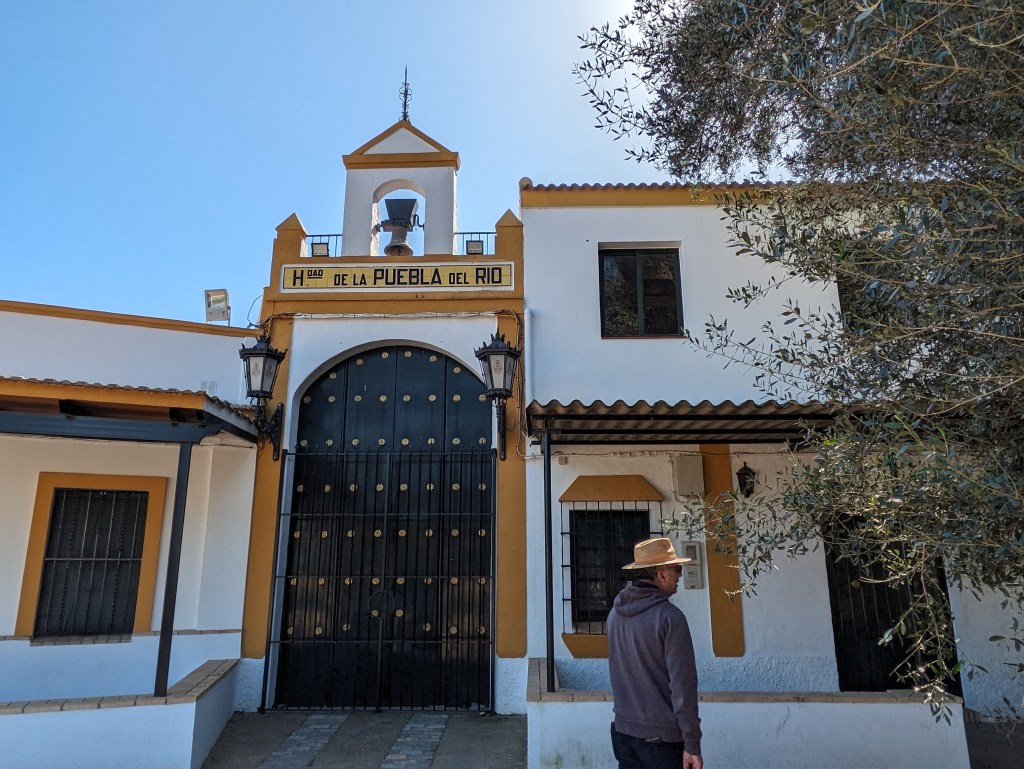
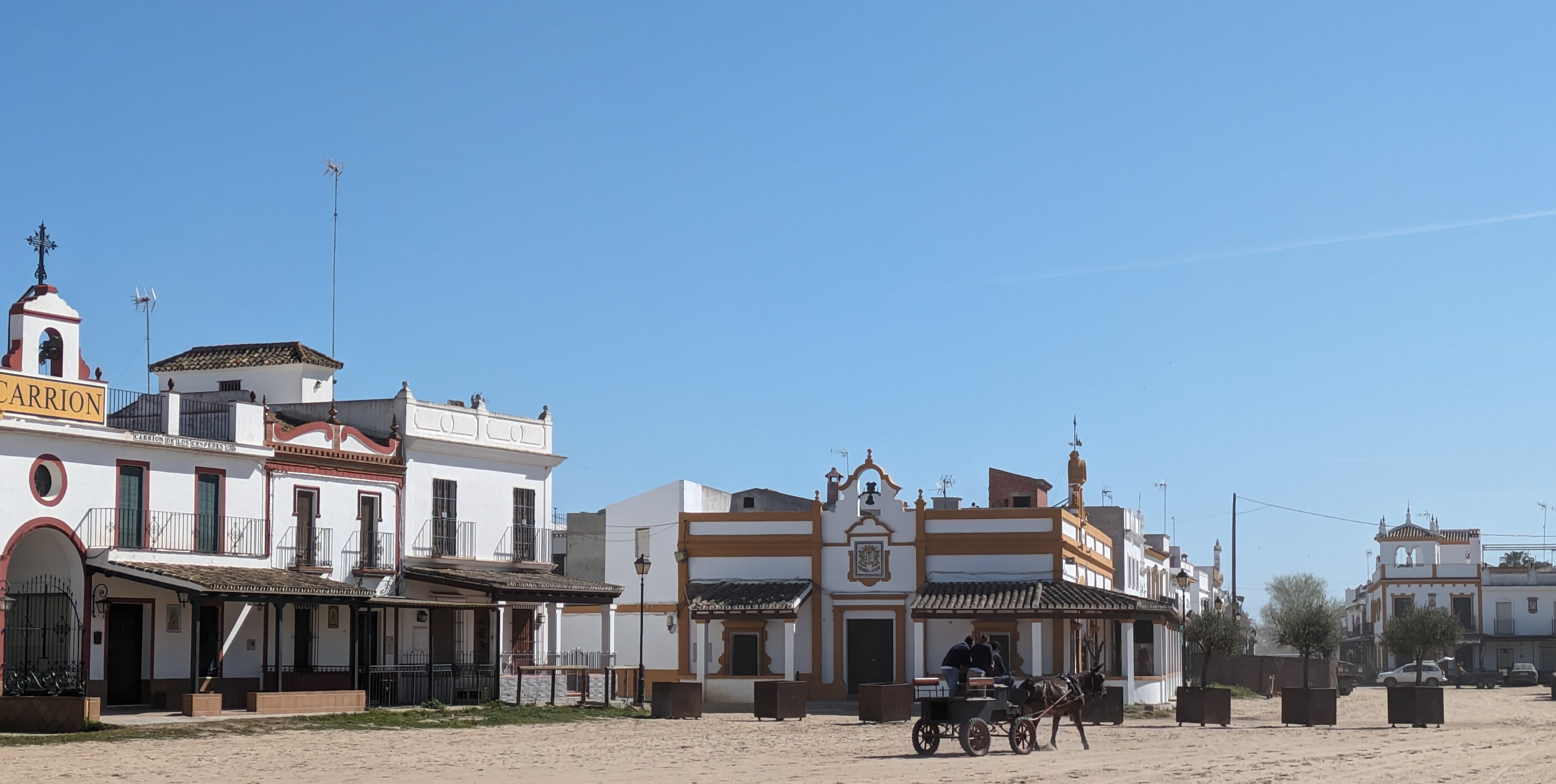


We walked around the village discovering all of the las casas de las hermandades. Each house displays the name of the hermandades, (usually from a village in Spain) and the date they were established.
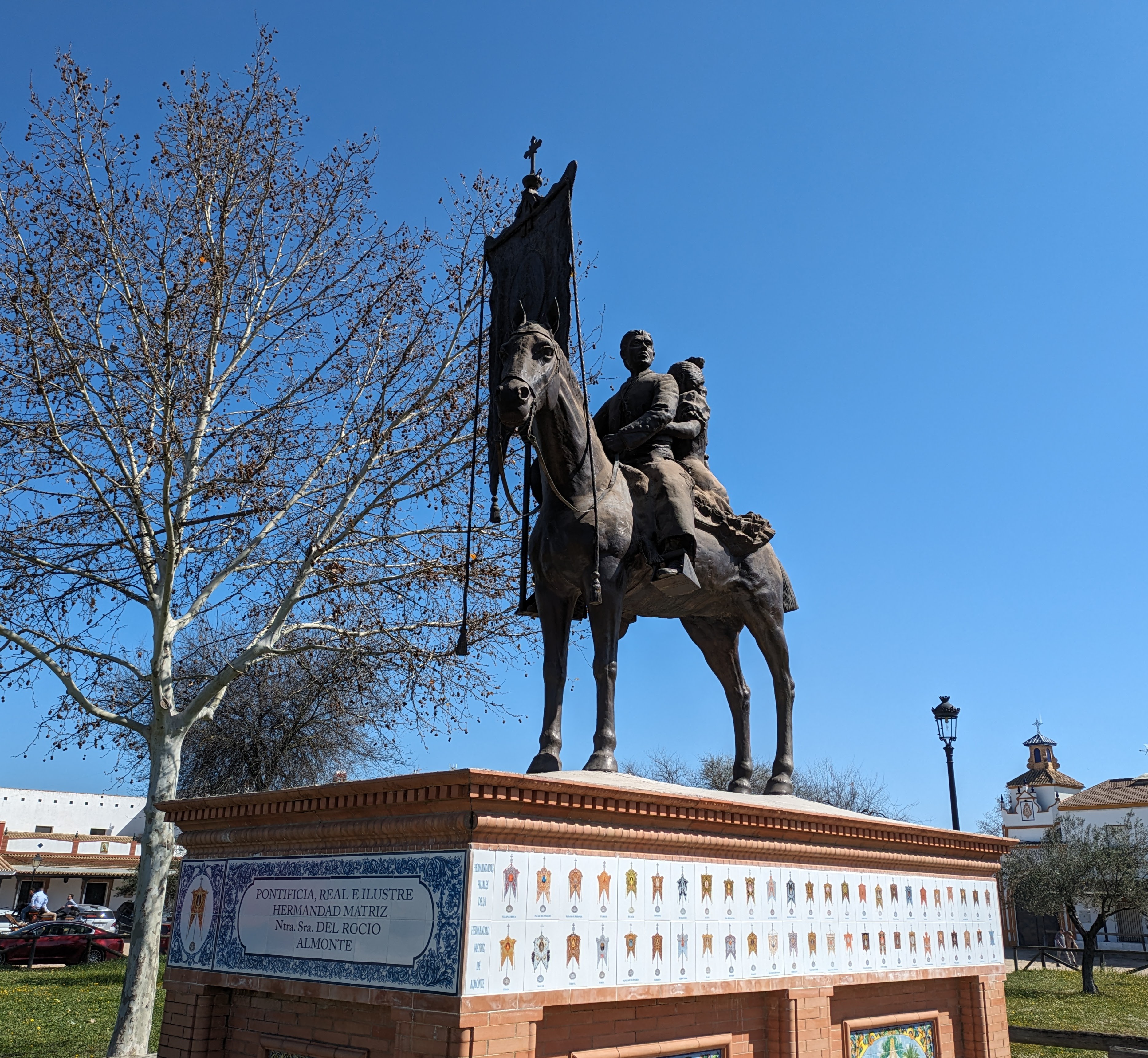
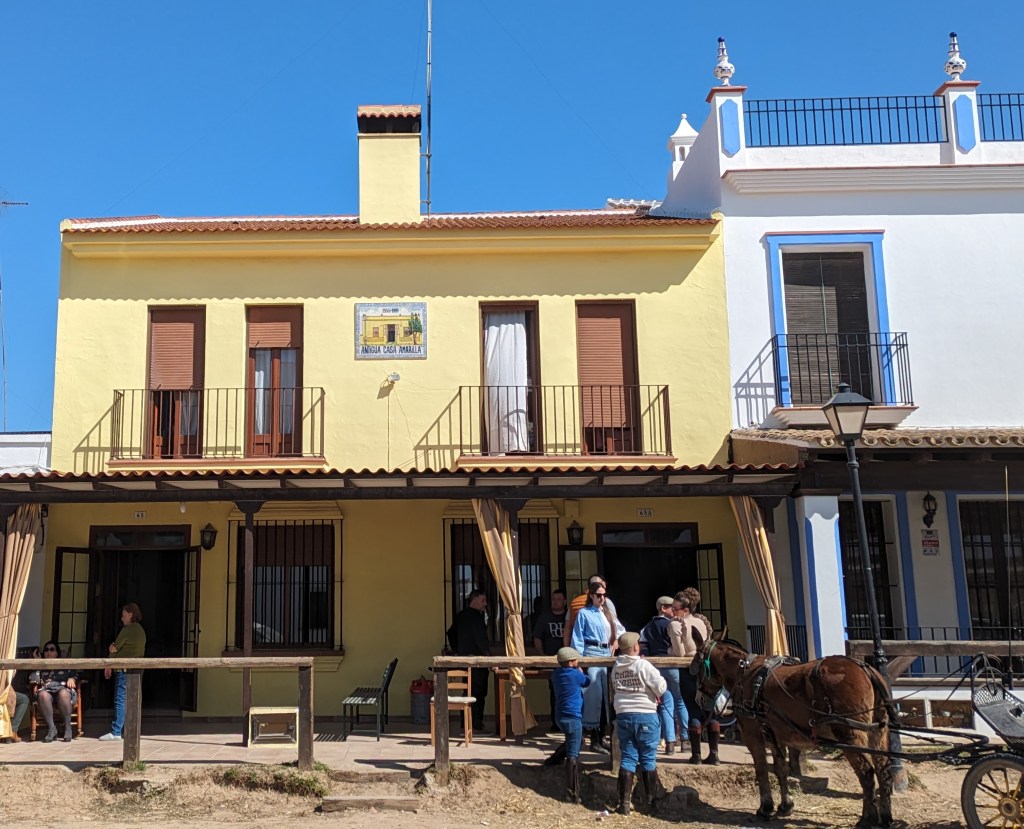
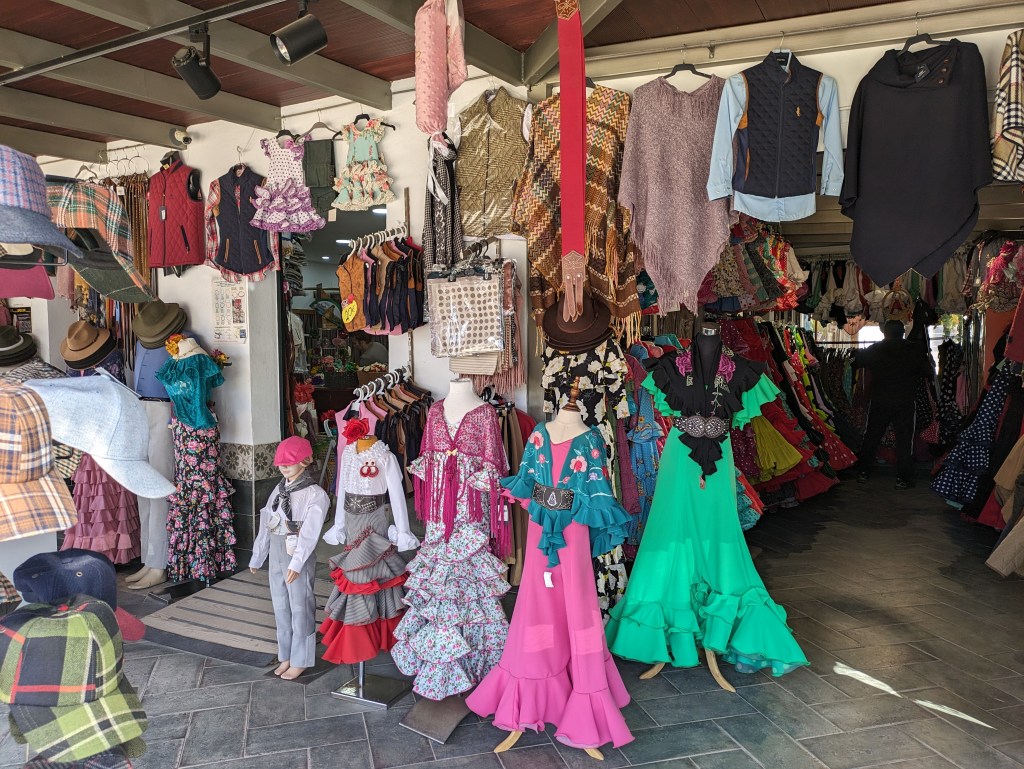
We had a wonderful morning but it was quite a warm day and after walking the dusty streets it was time to set off to Almonte and have lunch at the Taberna del Cristo (Tavern of Christ – which seemed fitting).


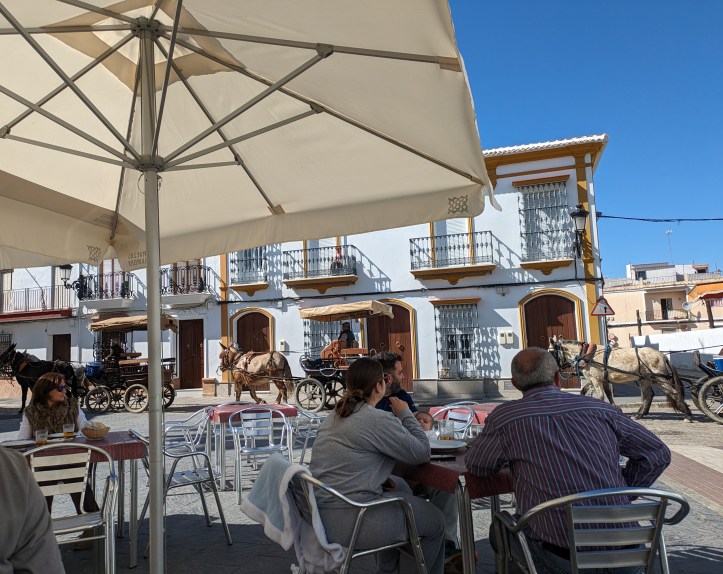
It was a lovely traditional bar. Sitting on the terrace in the sun, were were again treated with the sight of horses and carriages.
Lunch was delicious – such typical dishes, ensalada de tomate con atún and choco fritos (fried cuttlefish). No matter where we go in Spain, these dishes are nearly always on the menu in some form or other.
 Our life in Spain
Love your travels ❤️
LikeLiked by 1 person