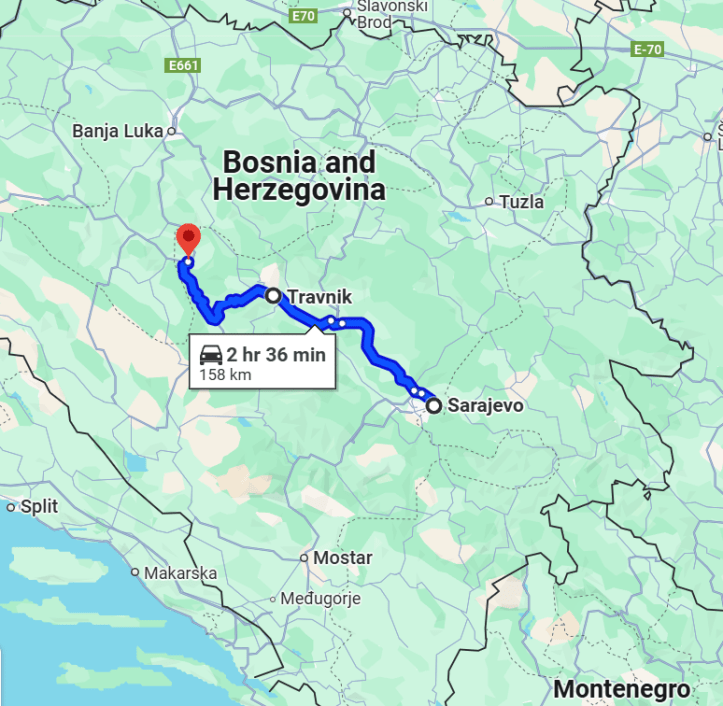
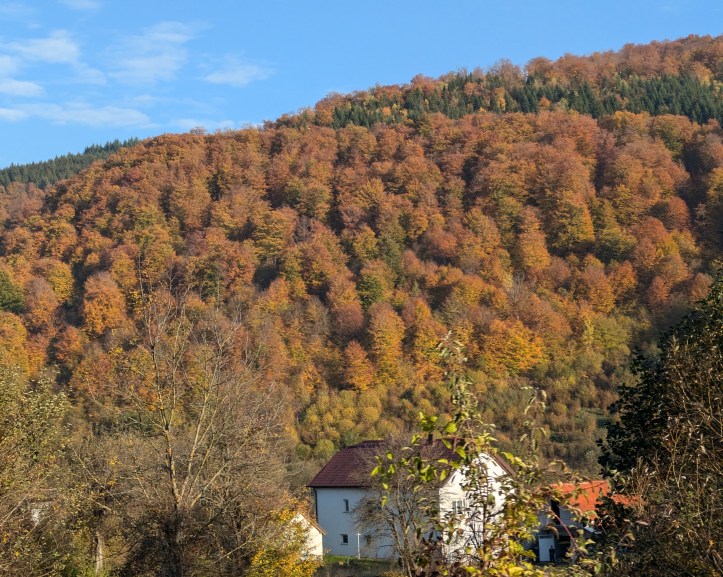
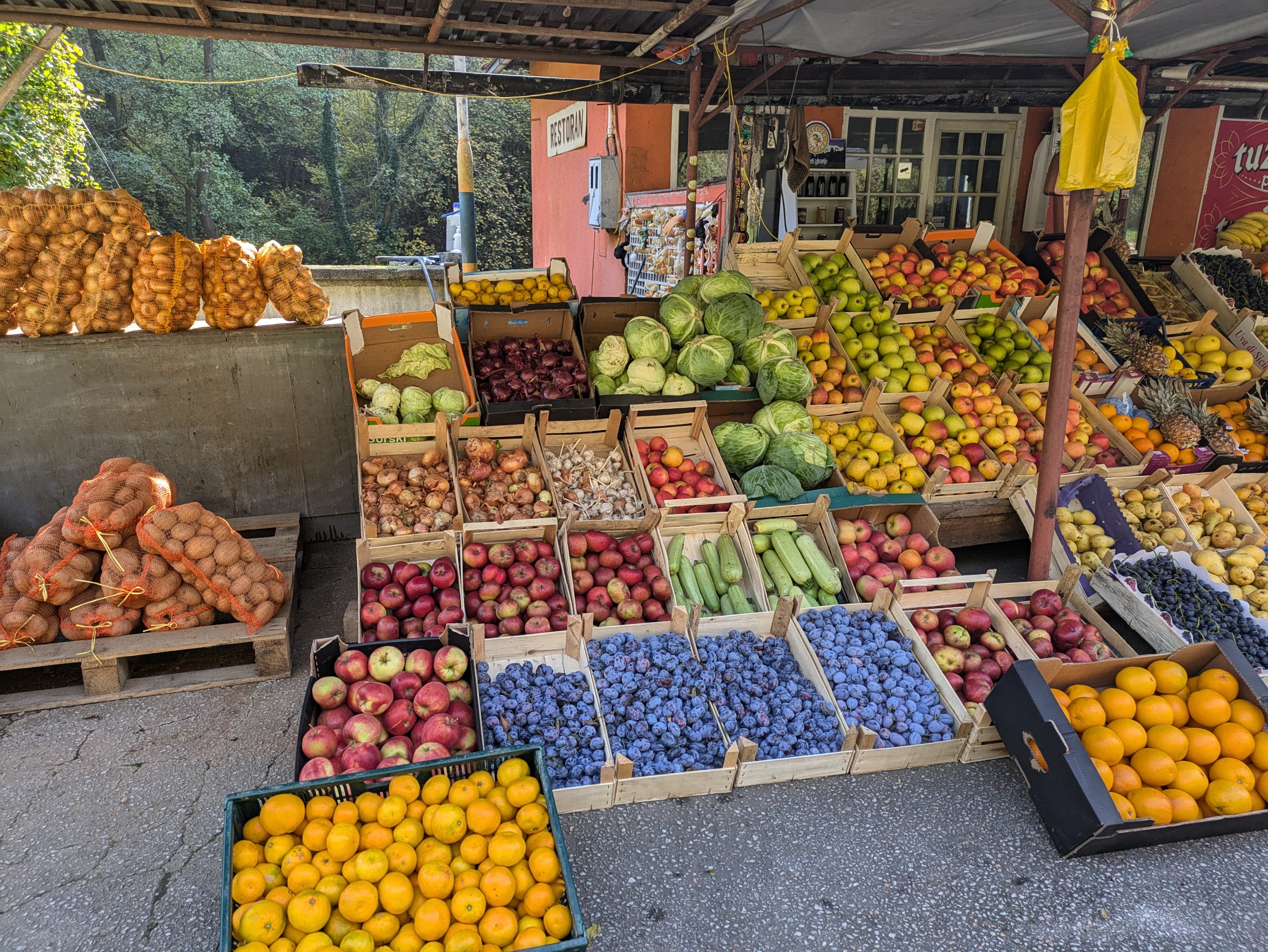
On our way to Jajce known for its waterfall, we stopped for a few hours at Travnik, one of the oldest towns in Bosnia and Herzegovina. After Sarajevo was burned to the ground in 1699, the Ottomans needed a new centre of administration and chose Travnik, which became the capital of the Ottoman era. Between 1699 and 1851, in total 77 viziers (governors) ruled Bosnia from Travnik, and it was referred to as the City of Viziers.
Here you will find the 15th-century Travnik fortress one of the best preserved in Bosnia and Herzegovina. However, we stopped to visit the Šarena Džamija Mosque, or as it is known the Colourful or Ornamental Mosque believed to be built in the 16th century.
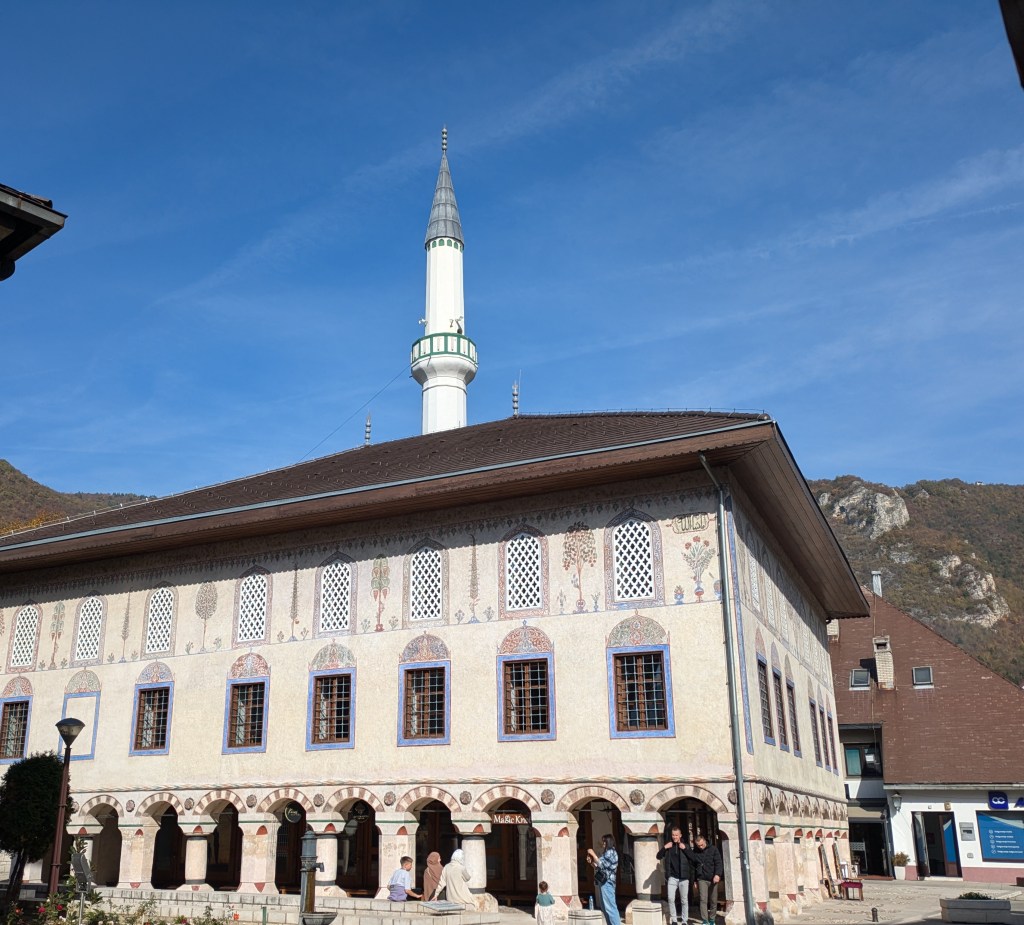
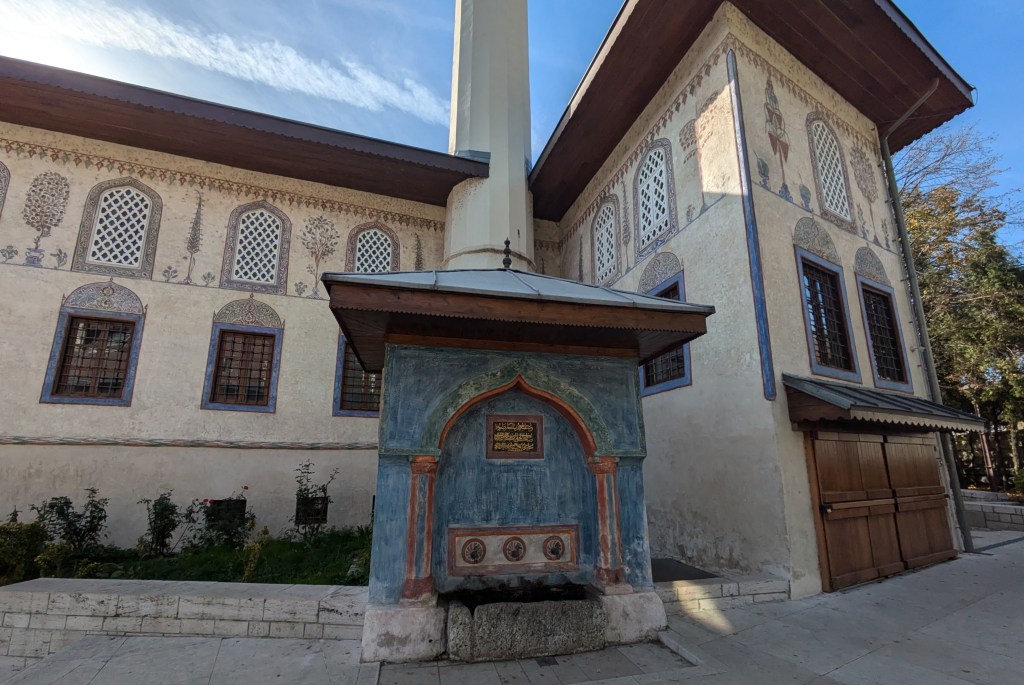
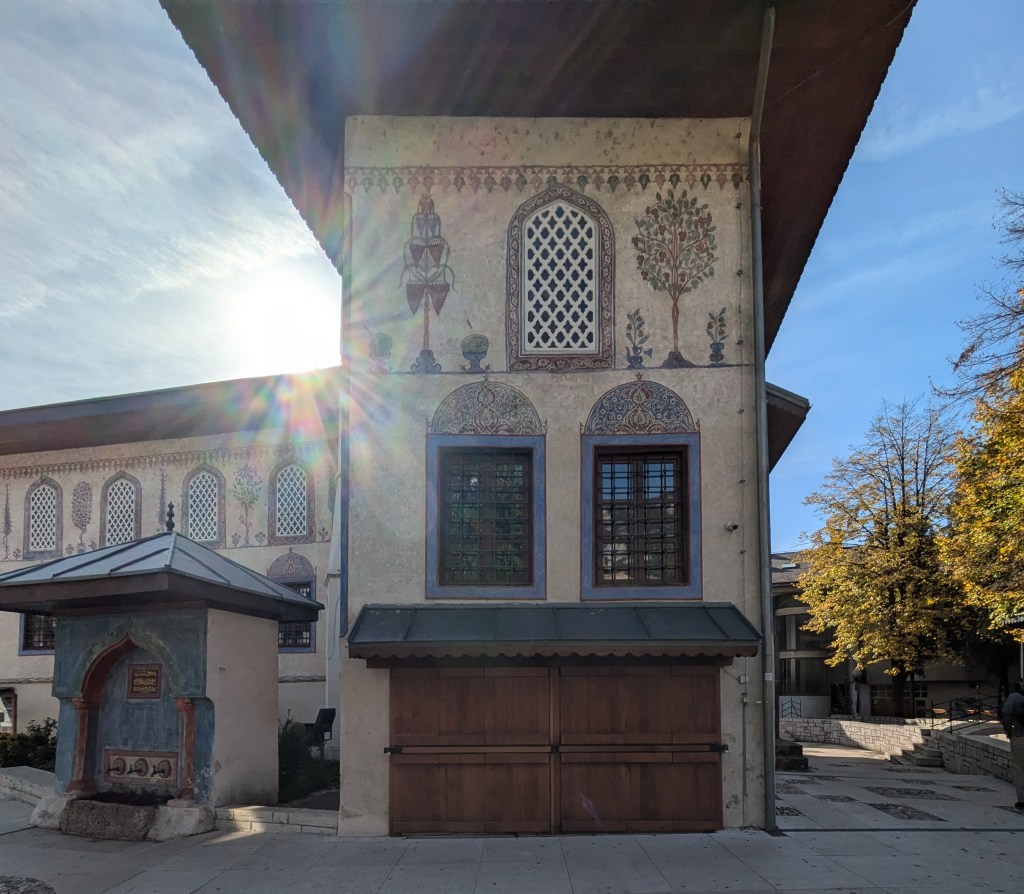
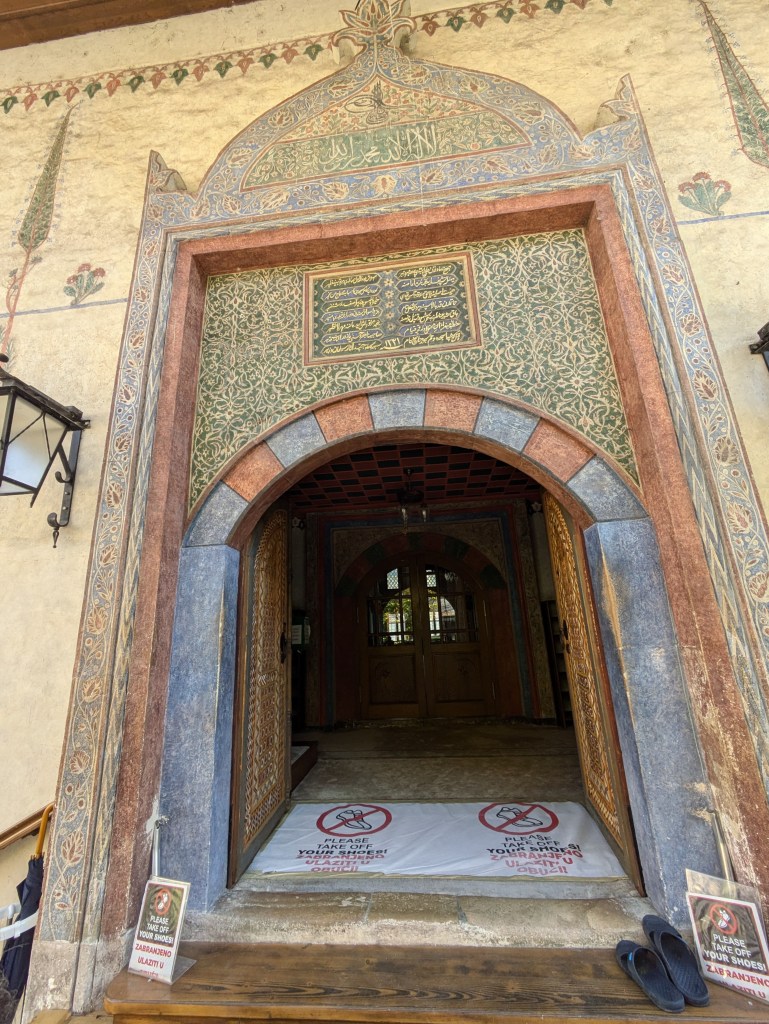
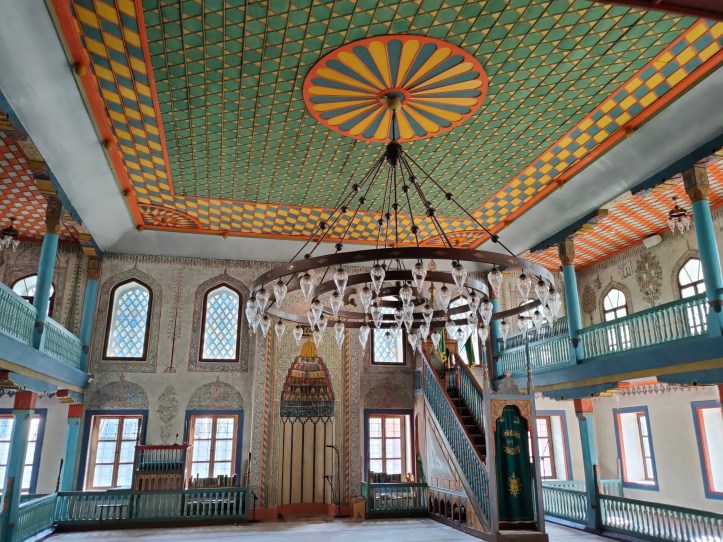
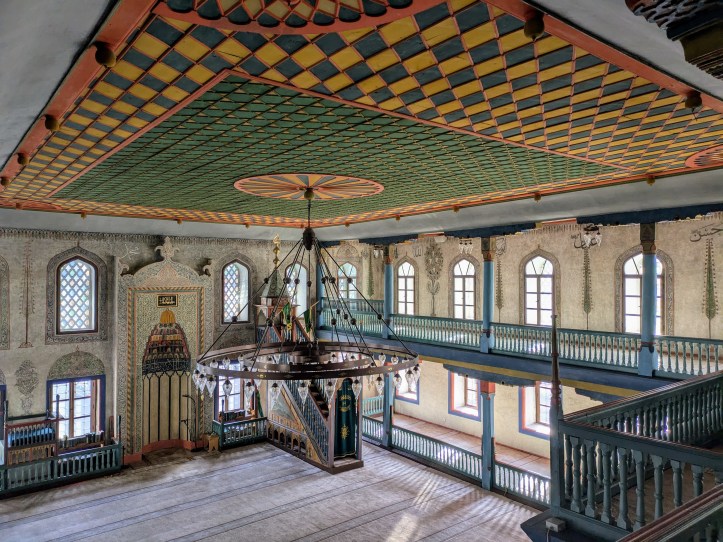
The exterior is painted with cypress trees, lilies, and intricate patterns and it is a beautiful structure befitting its importance and location in Travnik. The minaret is on the left side (also unique), and a columned market underneath. The interior is deep green with a chessboard design surrounded by tulips, dandelions, lilies, and more. It is only small but very unique and beautiful.
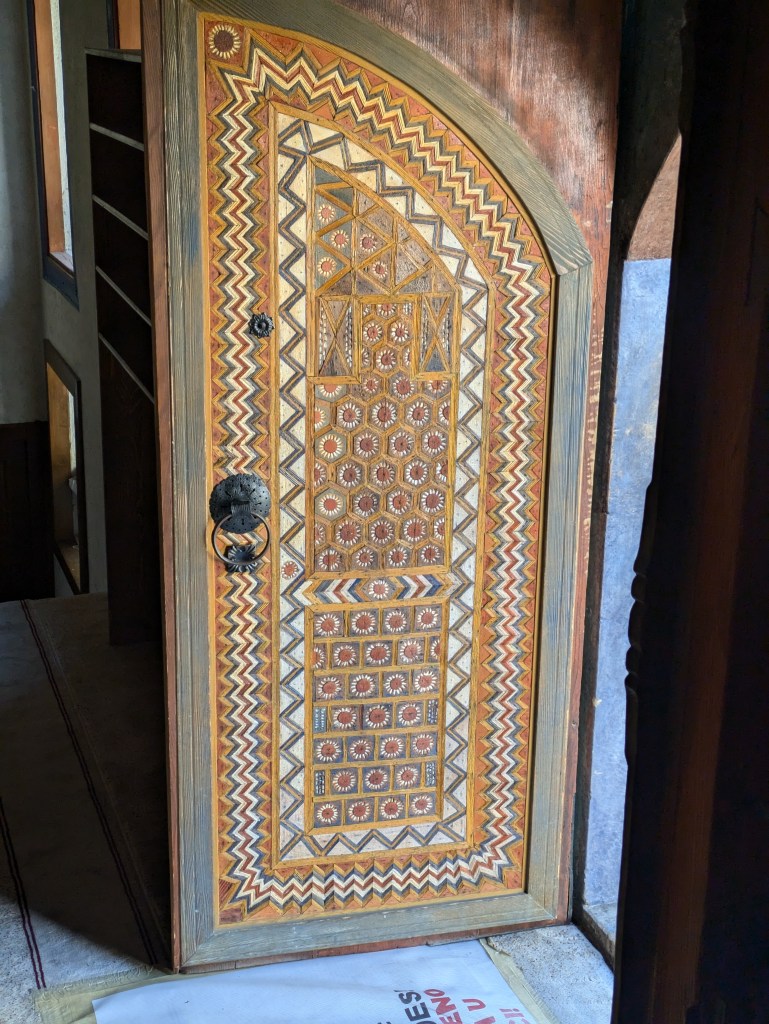
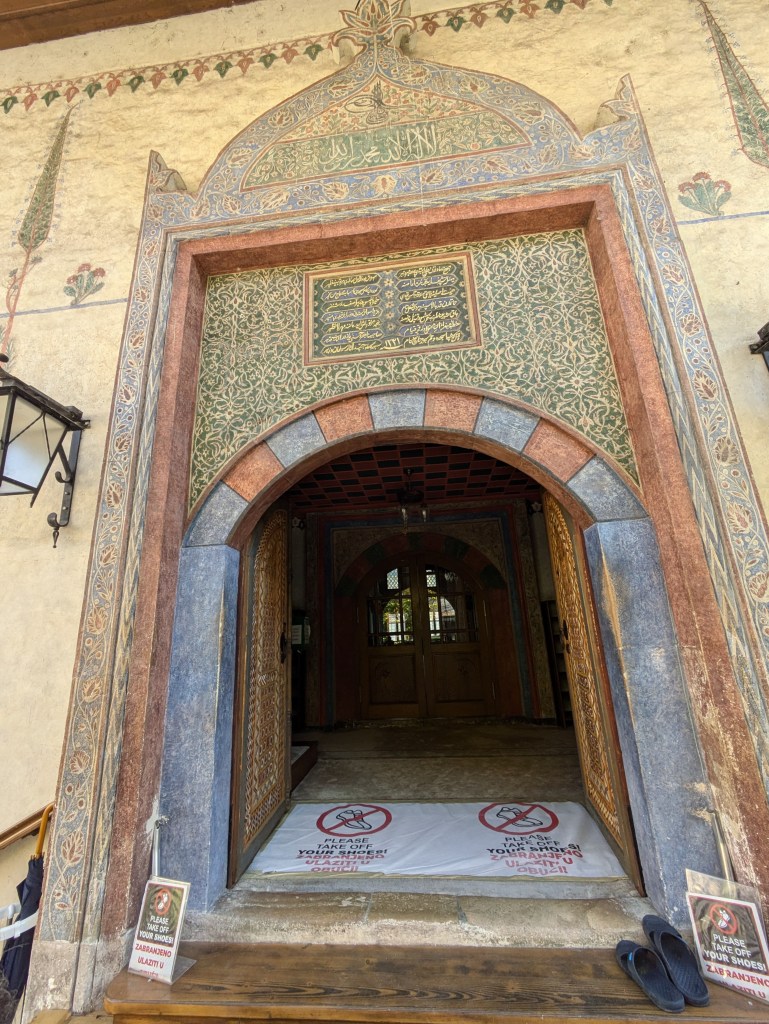
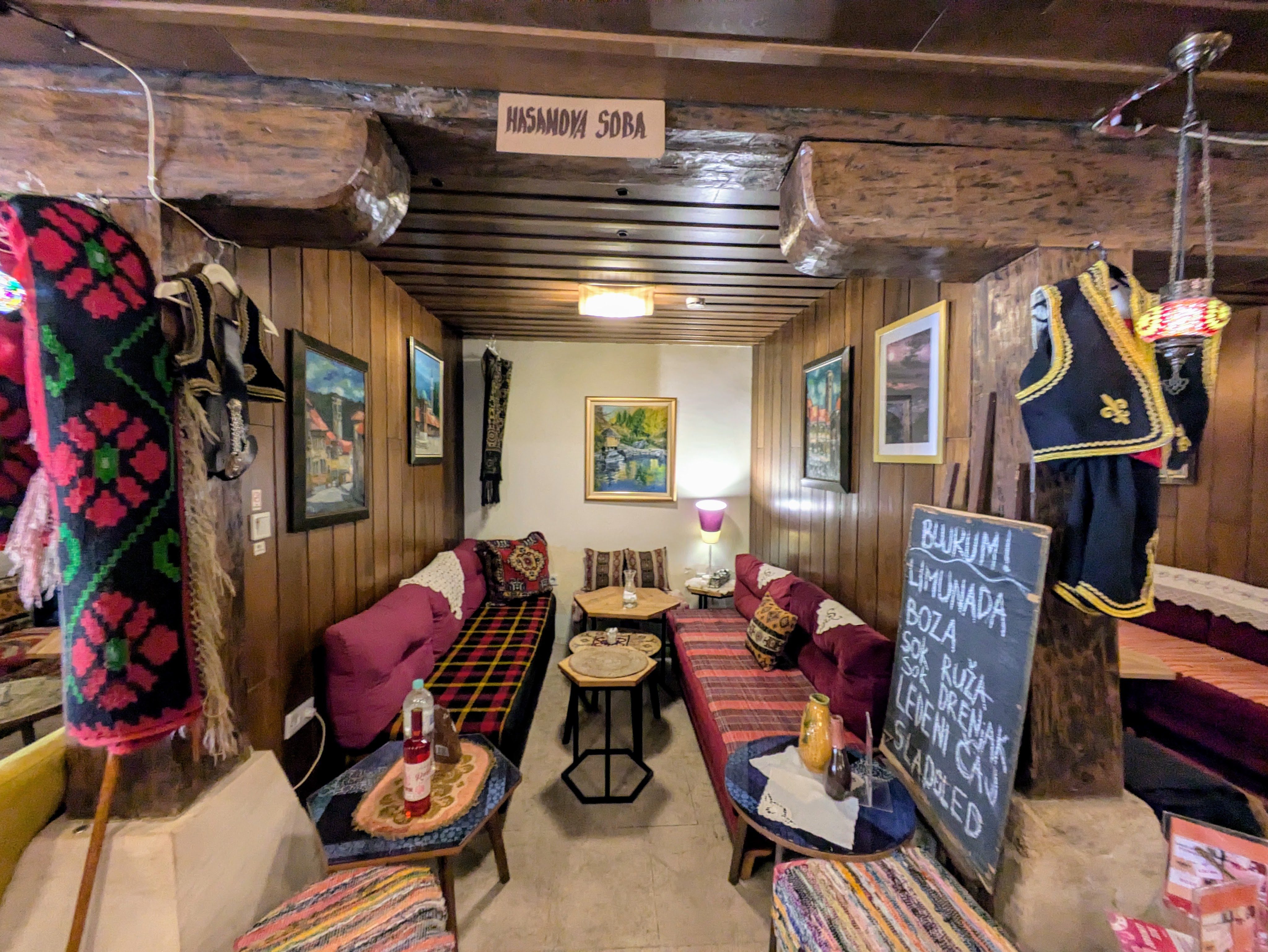
We also visited Vezirov Dućan a cafe located underneath the mosque. It is a concept café that aims to promote craftsmanship and local history. It has historical displays set up in “rooms” each reflecting a former vizier or administrator from the Ottoman era. The owners were kind and welcoming and the gentleman was an amazing storyteller. He had lived in Kuala Lumpur for 20 years before returning recently to Bosnia.
We continued our drive to Jajce where we would spend the night.
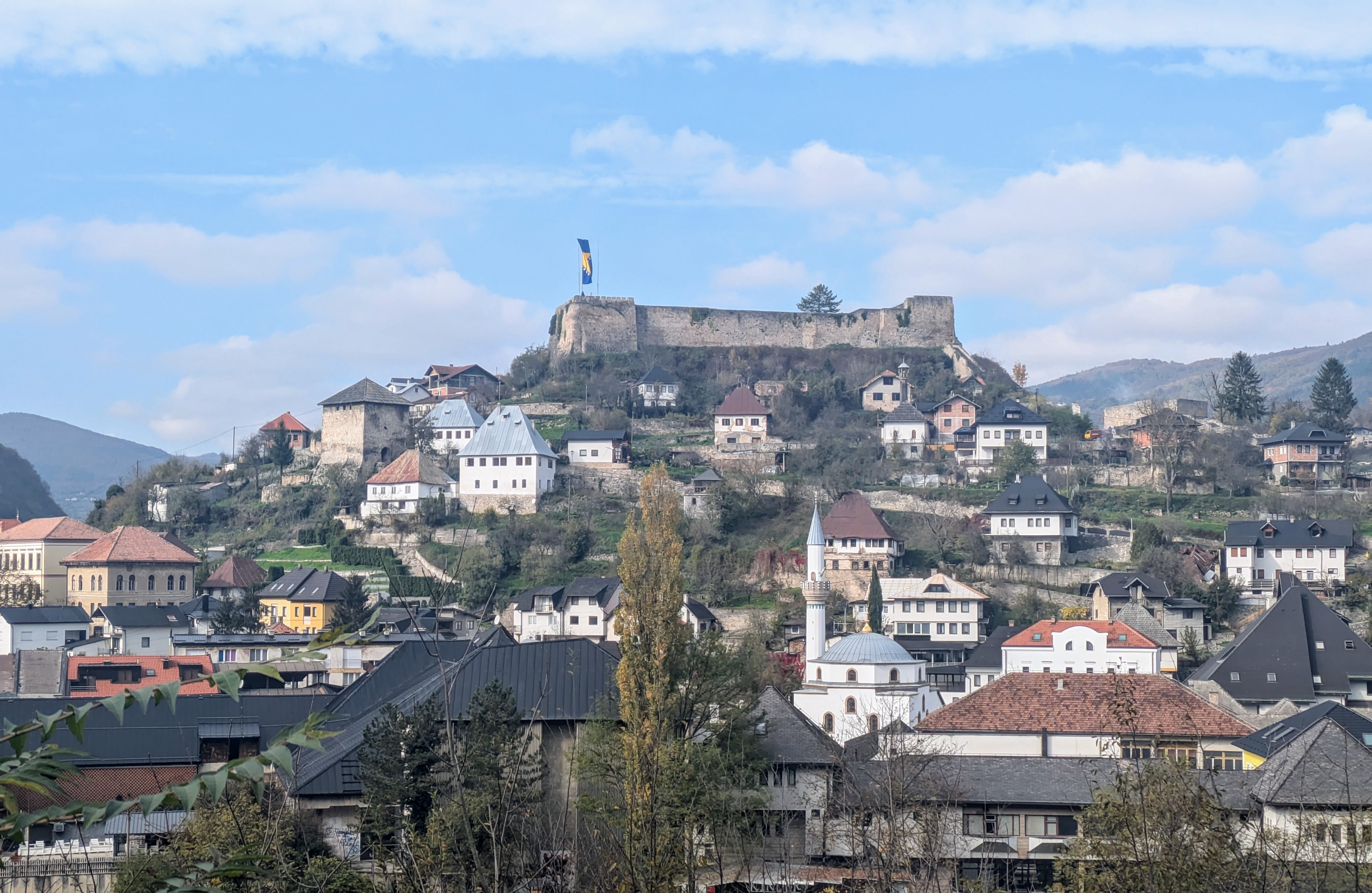
Jacje was founded in the 14th century by a feudal lord and later became the ancient capital of the Bosnian kings. It fell to the Turks in 1461, when the last king was executed. It was taken again by Hungary and was the centre of the province of Jajce in 1463–1528. The Turks returned in 1528 and remained for 350 years. Austrian occupation began in 1878, and Jajce was the scene of local resistance. The town became part of Yugoslavia after World War I. During World War II it was the base of operations for the Communist resistance forces under Marshal Tito.
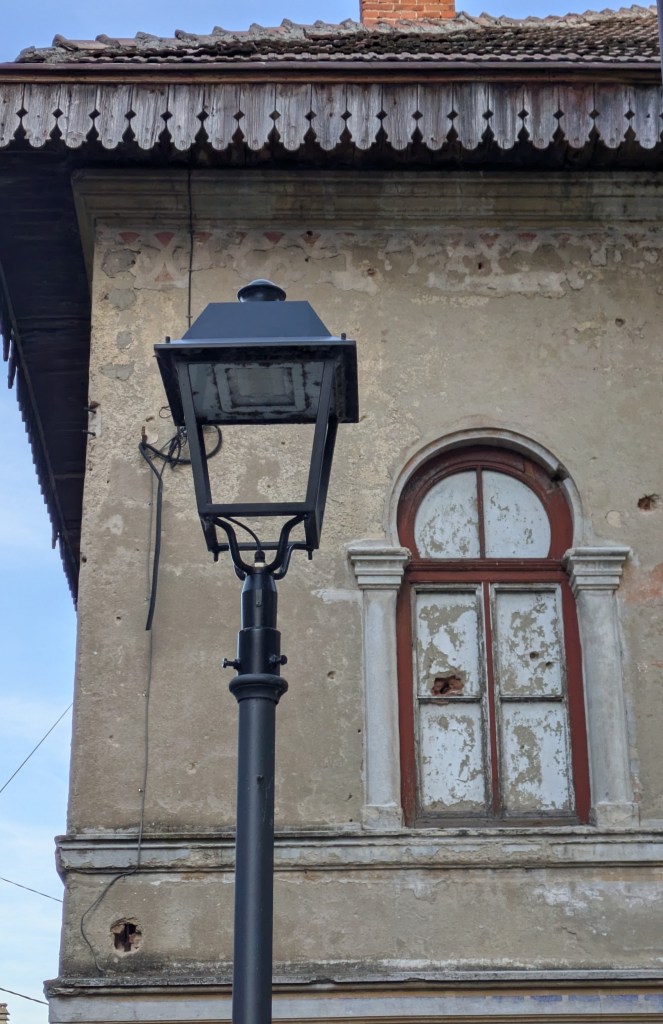
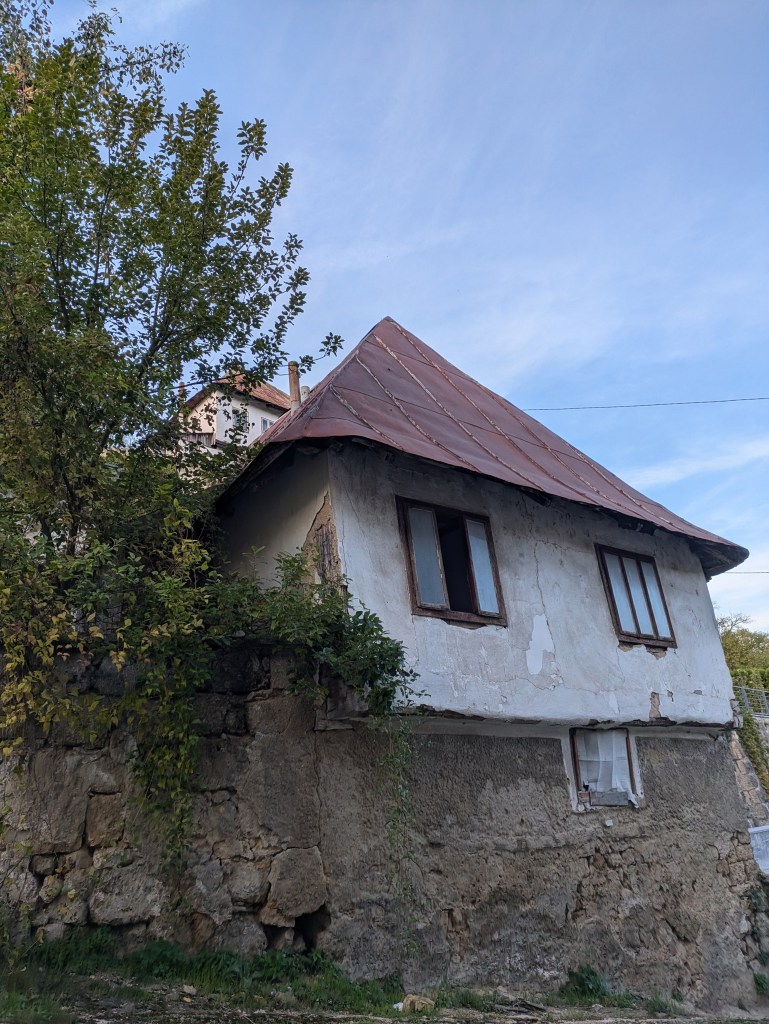
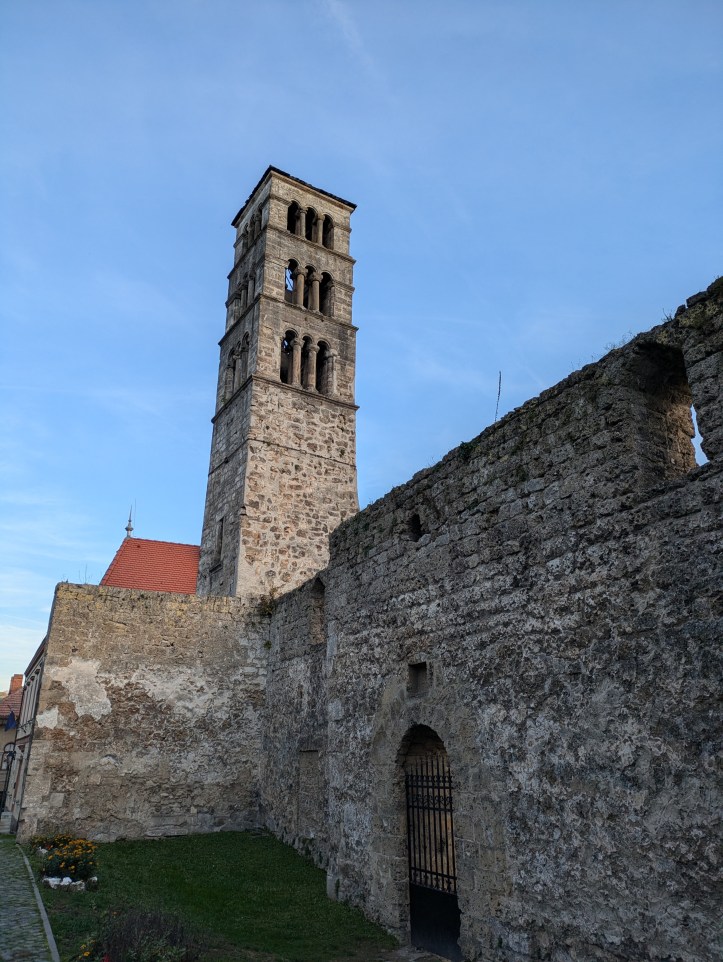
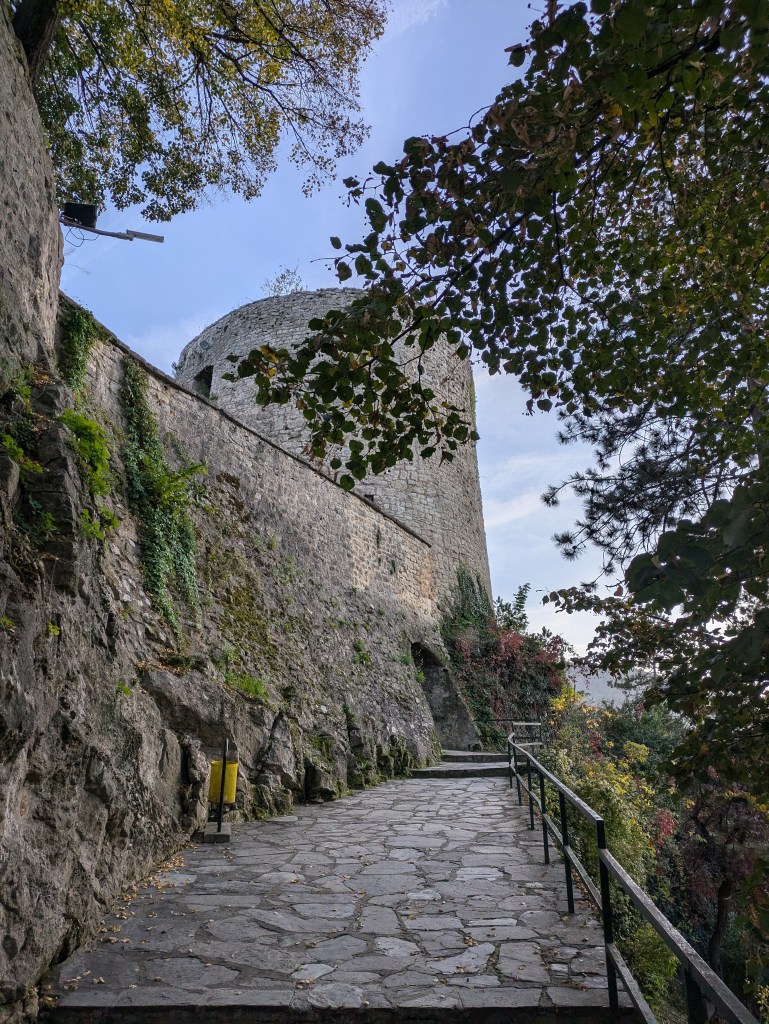
Jajce Fortress was the stronghold of the town of Jajce and helped maintain the city’s independence while the rest of the Kingdom of Bosnia fell to encroaching Ottoman forces. It could not hold out forever, though, and in 1527 Jajce was finally overtaken, making it the last Bosnian town to fall to Ottoman rule.
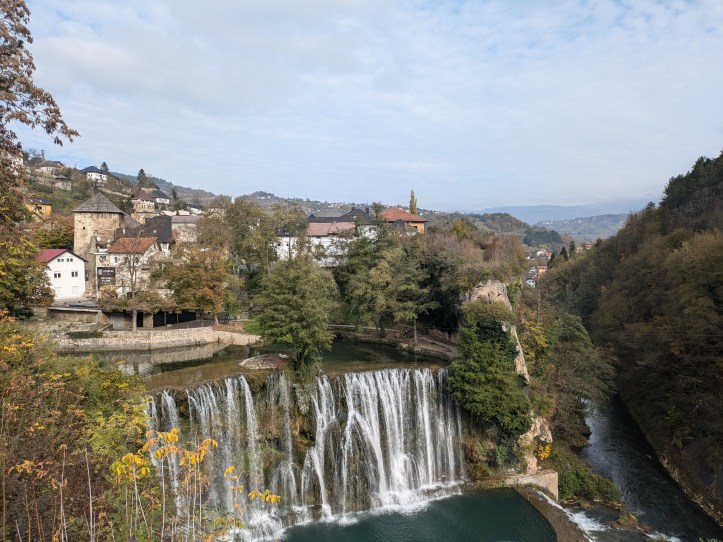
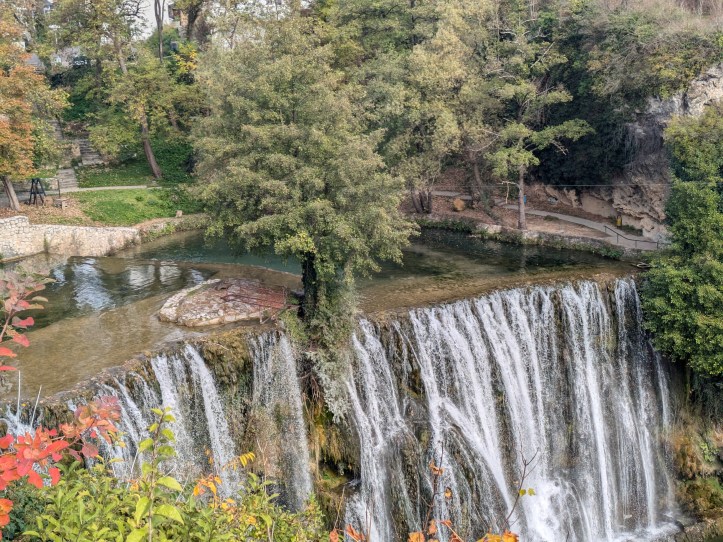
The main attraction of Jajce is its beautiful Pliva Waterfall (22 metres high) which sits at the edge of the town and flows into the Vrbas River. It is also the only waterfall located in the city centre. Bosnia and Herzegovina has many large rivers and waterfalls the most famous being Kravica Waterfall near the Croatian border.
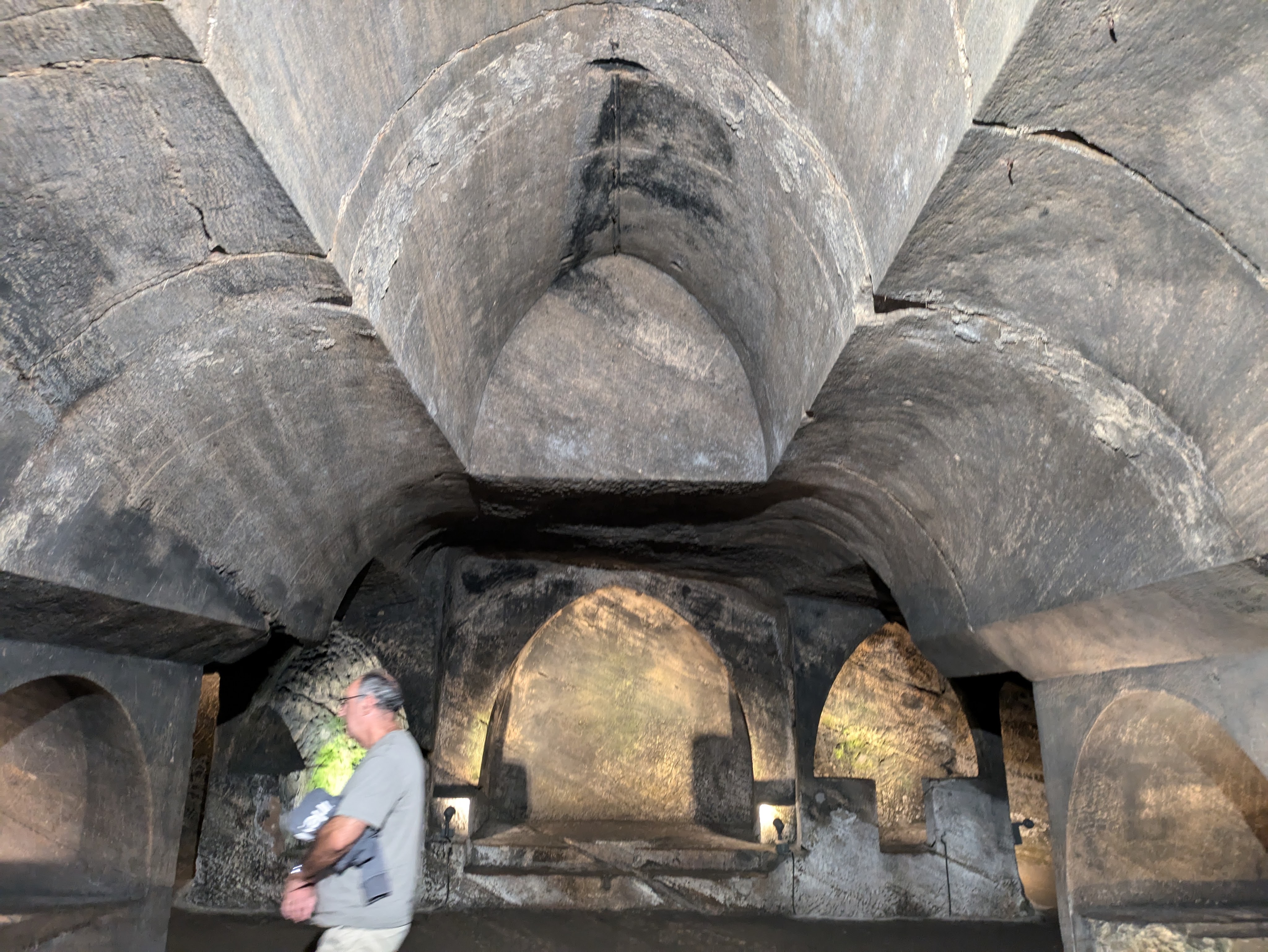
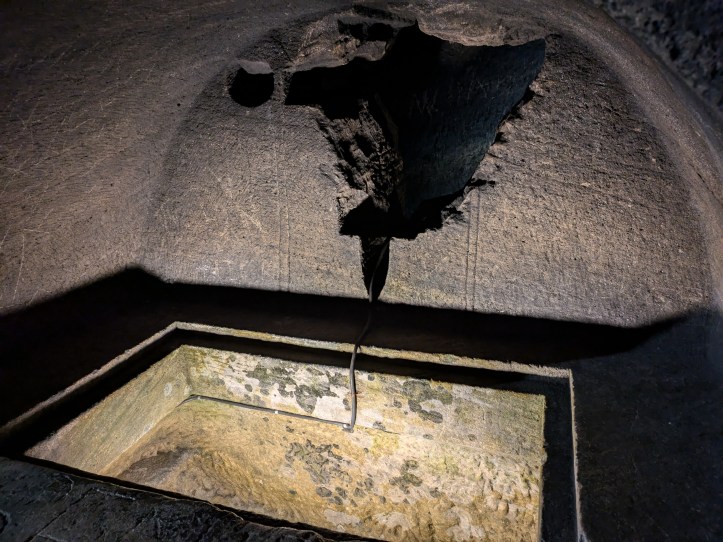
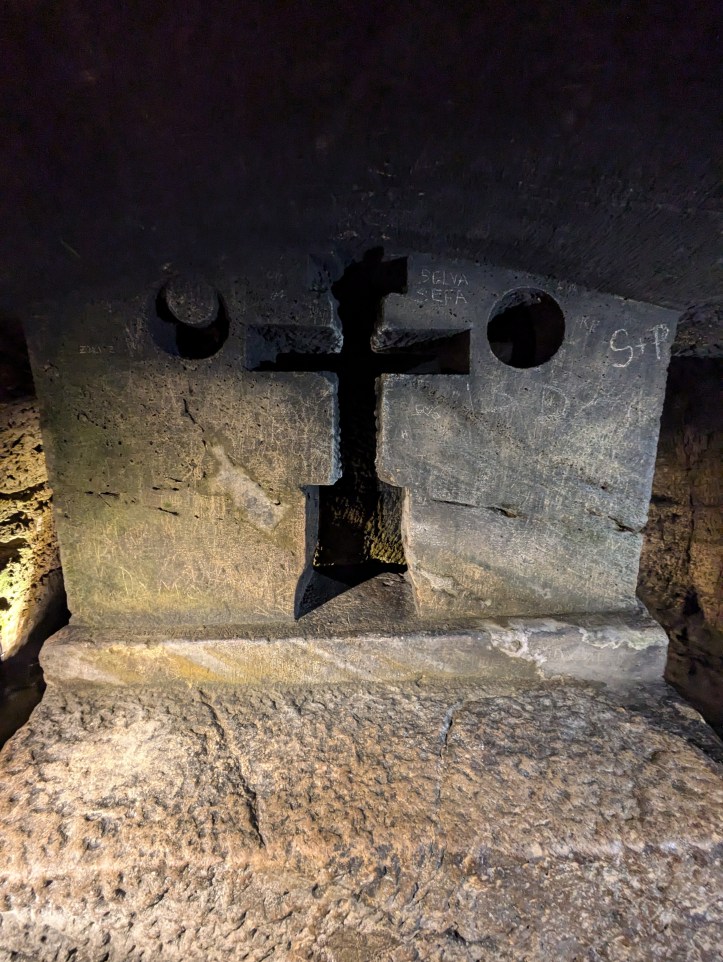
The Jajce Catacombs is an underground crypt that is the final resting place of Hrvoje Vukčić Hrvatinić, the mediaeval founder of Jajce who was a significant player in Bosnian politics at the time. The catacombs are hollowed out of the rock, and the layout resembles a church, including a presbytery with an altar.
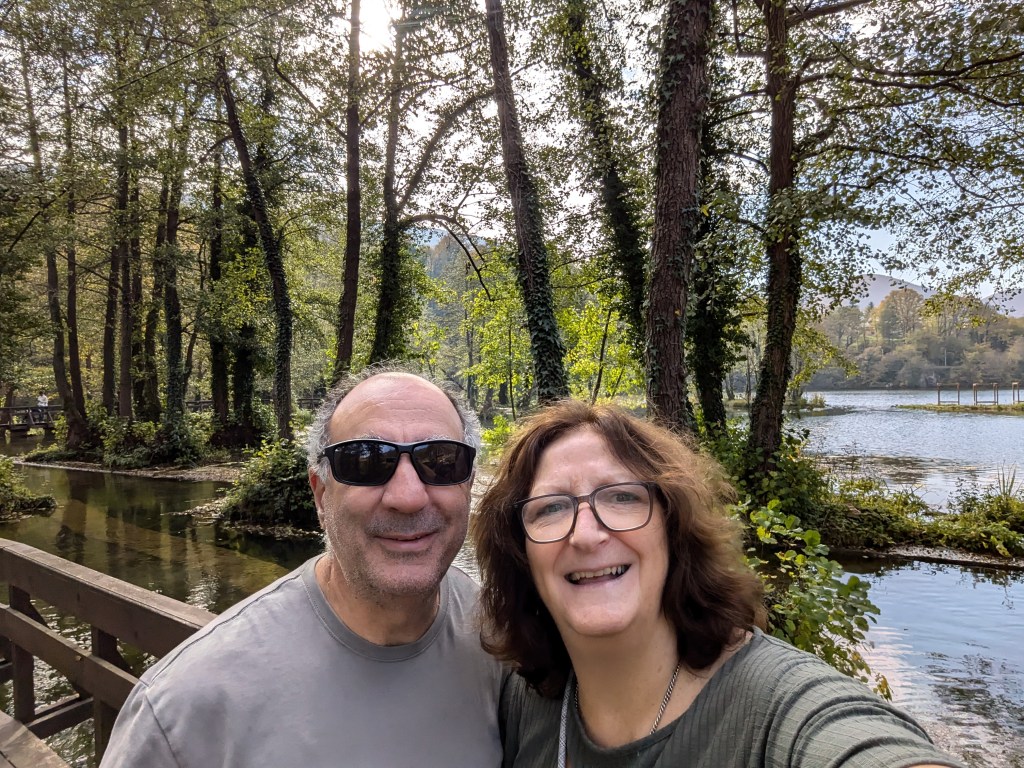
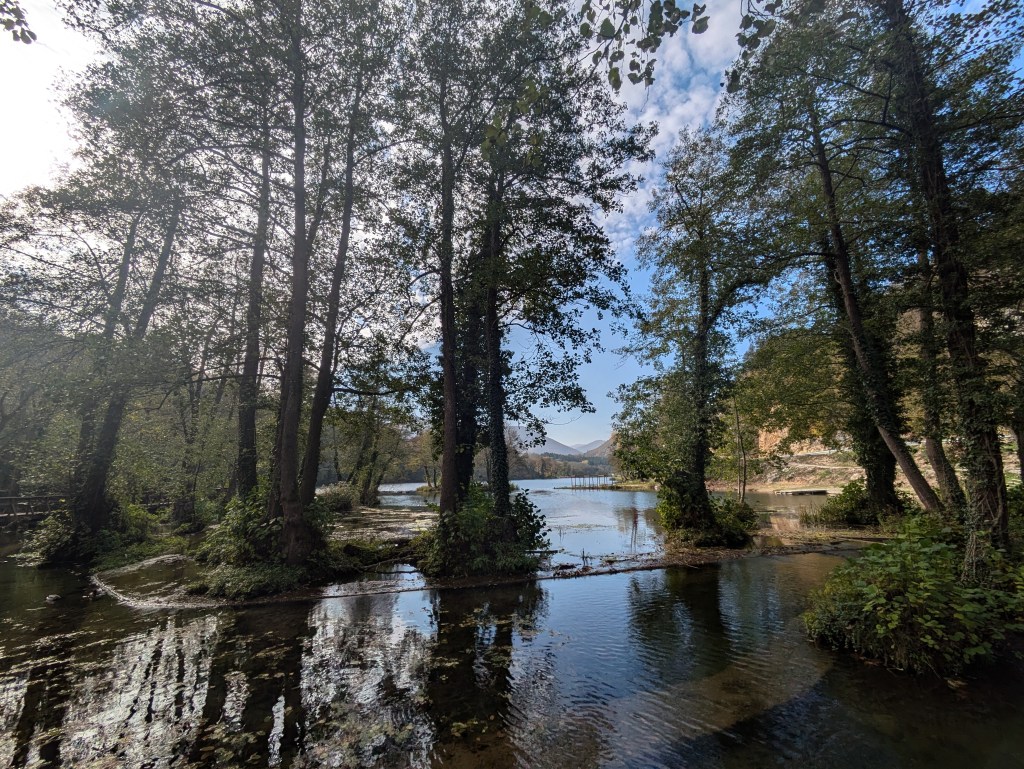
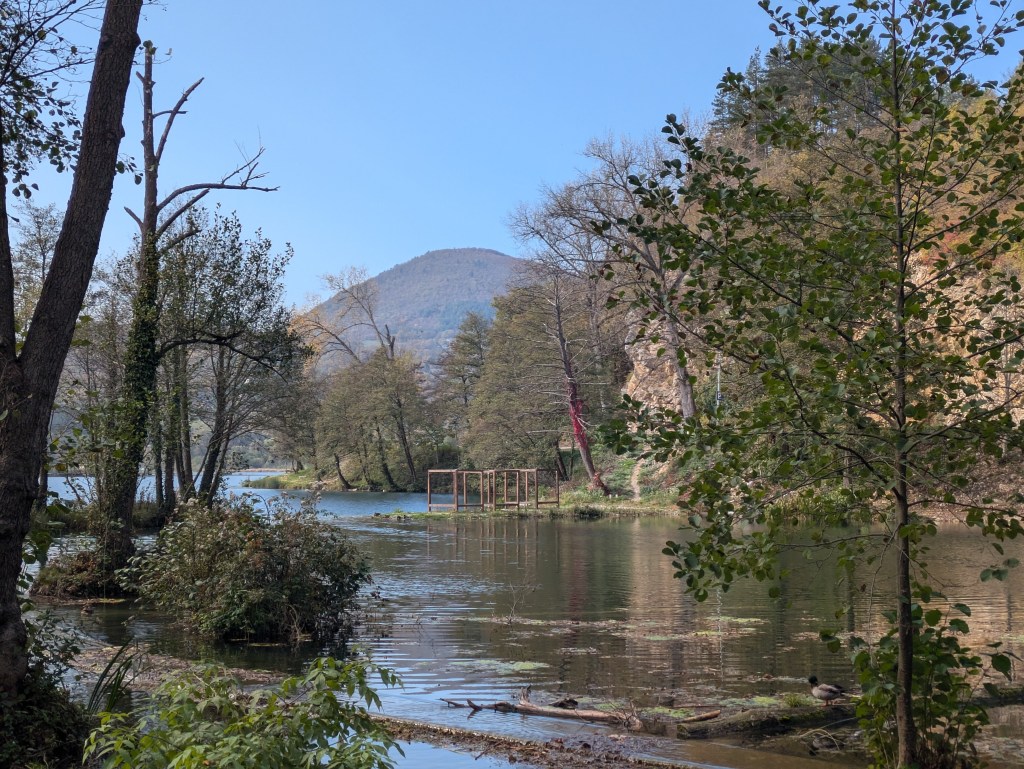
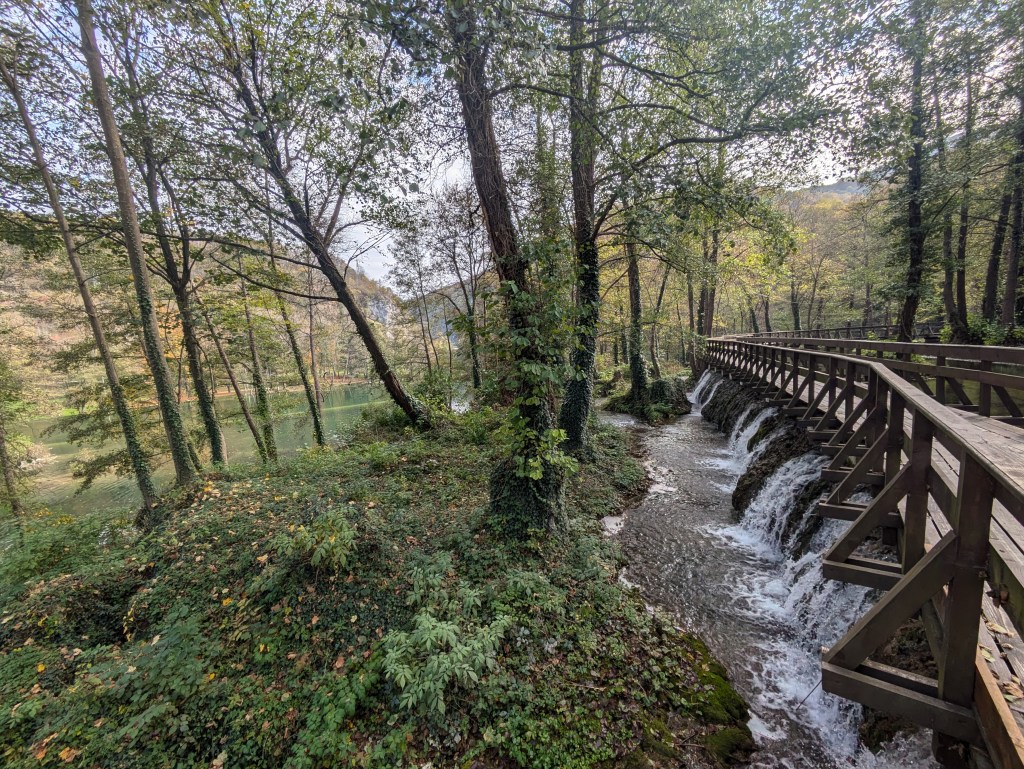
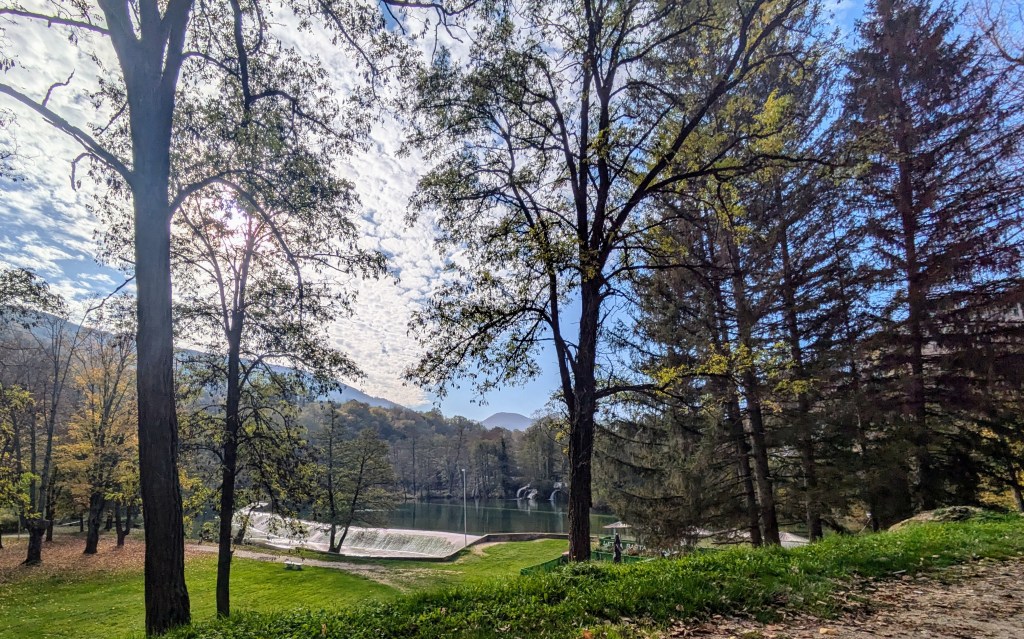
On our last day, we drove just out of town to the beautiful Great and Small Pliva lakes, the largest natural lakes in the country.
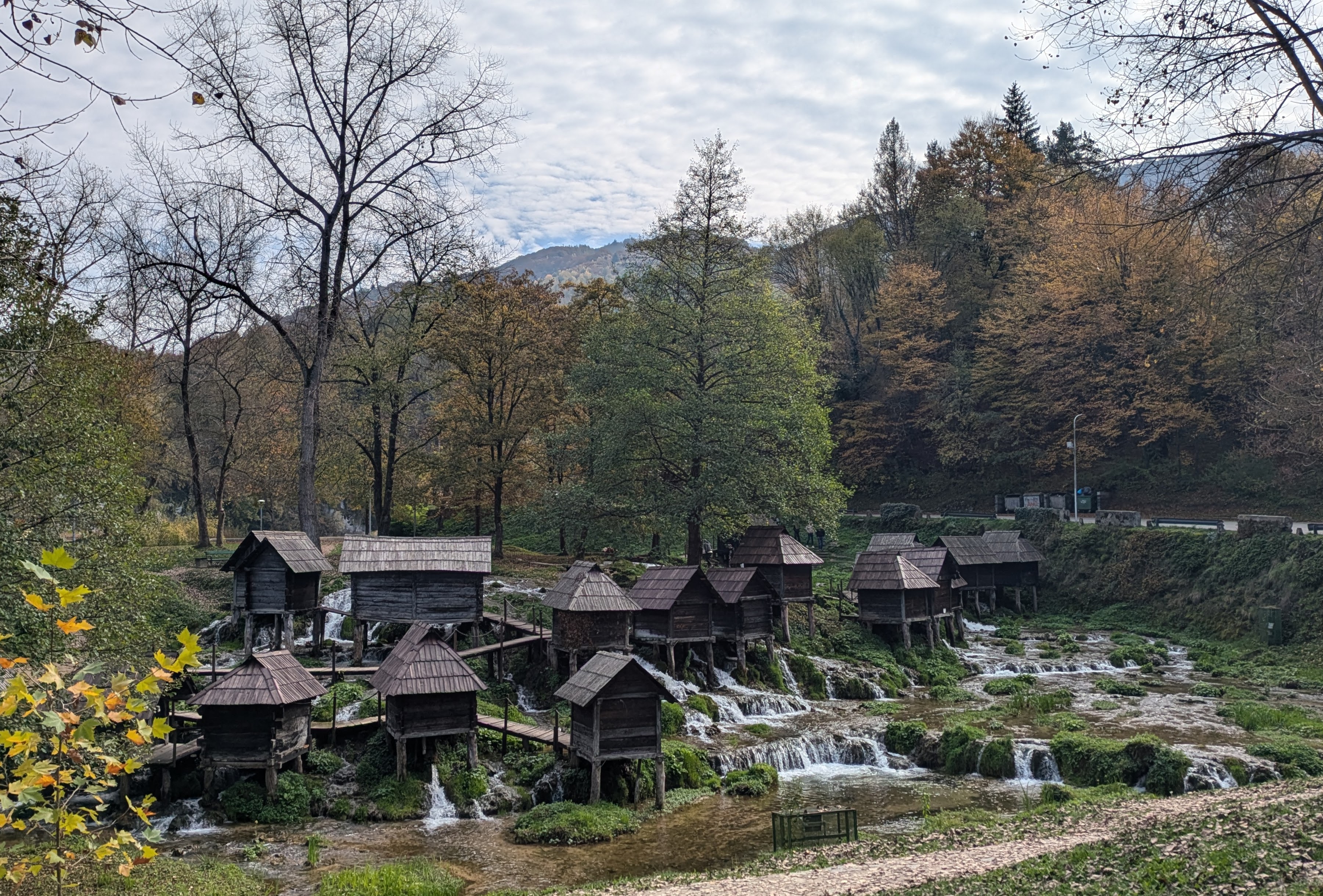
Located on the lakes is Mlinčići the Pliva water mills, 20 small mills built of oak wood, in 1562. Stories say that Pliva Watermills were owned by rich landowners who allowed local residents to use them and then they paid taxes on their use in flour.
The whole region was spectacular, and it was great to visit two towns that are historically and culturally important in Bosnia and Herzegovina.
On our way home we stopped for lunch at Restoran Oborci, a roadside restaurant (they always seem to be the best!)
They had a limited menu (low season) but they are known for the grilled meat over a woodfire, in particular meat cooked in Sač (the domed pan over a woodfire) so we stopped for that reason.
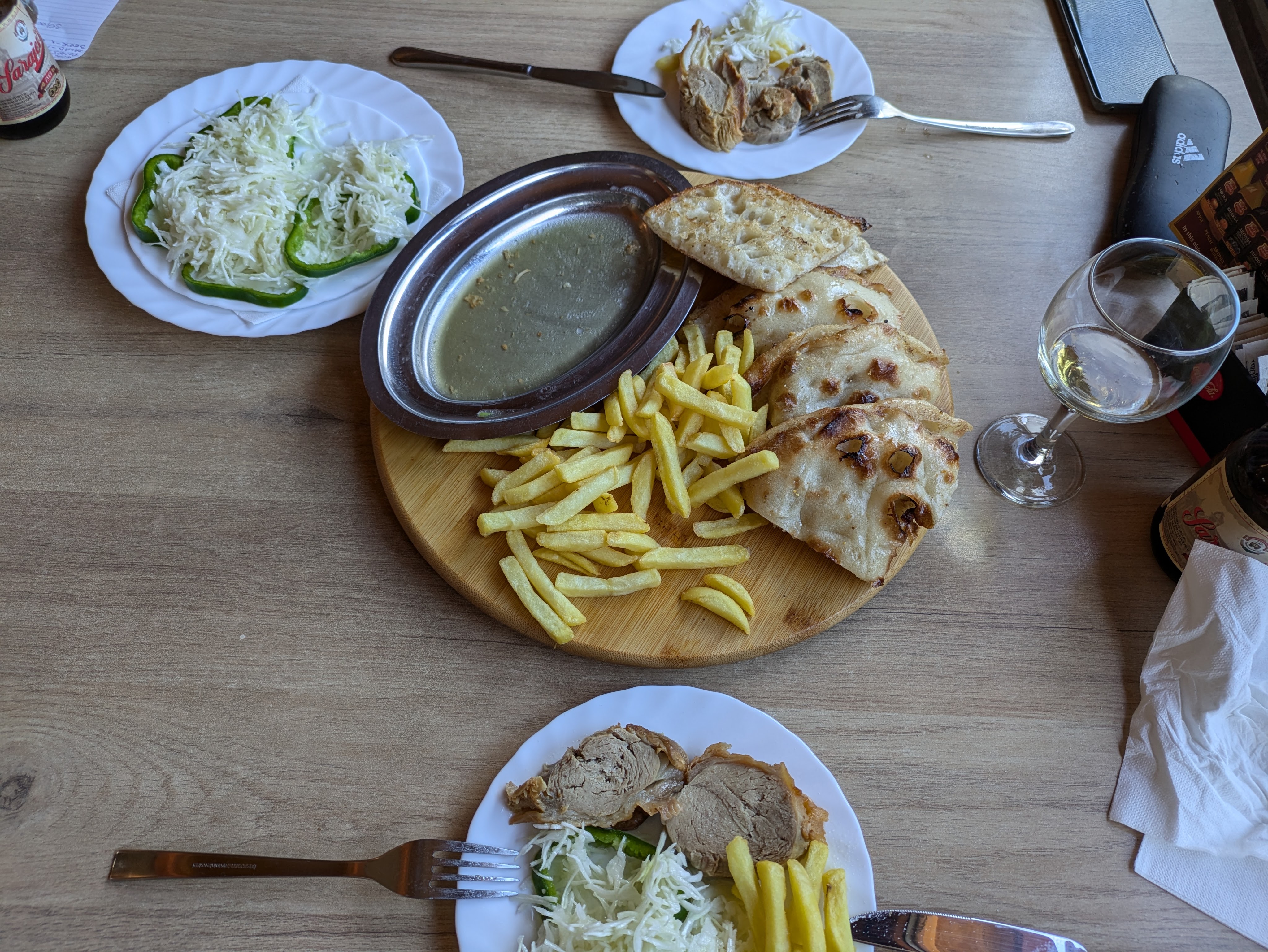
We got the veal sač, a season salad, which here in Bosnia always includes cabbage, and some french fries.
A very basic meal but probably one of the best we have had. The veal fell apart and was super tasty and the cabbage salad was so good you could tell everything was fresh from the garden. The bread had been warmed up over the meat grill.
 Our life in Spain